
Get a Customized Solution for Your IT Needs
+91 702-705-8777
info@pansofic.com
55-56, 1st floor, Chandigarh Complex, Prabhu Prem Puram, Ambala Cantt, Haryana 133006


Learn the complete technical SEO guide for beginners to improve website speed, indexing, and Google rankings in 2026.
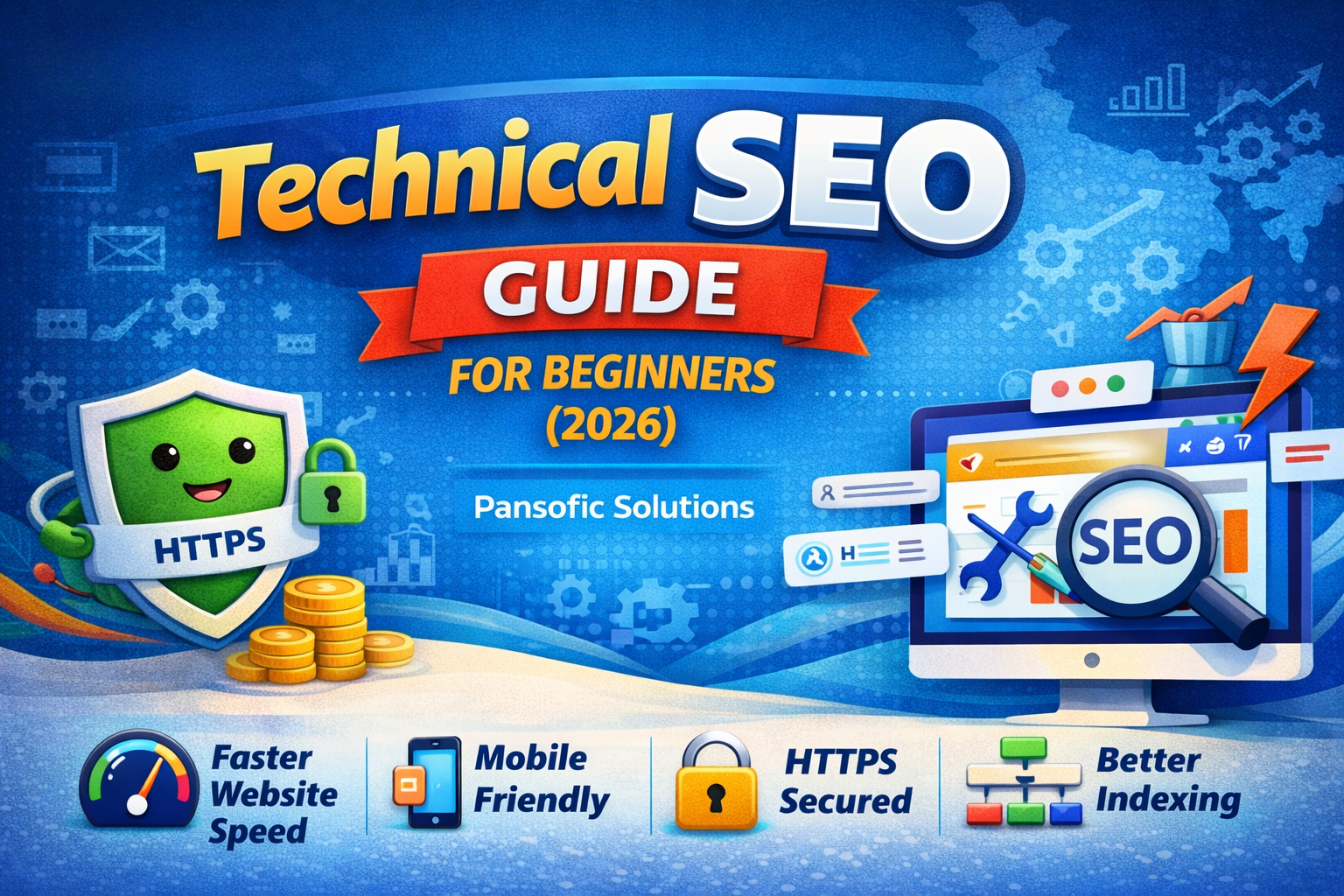
Technical SEO is the backbone of a high-ranking website. You may have great content and keywords, but if Google cannot crawl, index, and understand your website properly, ranking on the first page becomes very difficult.
This Technical SEO Guide for Beginners is specially created by Pansofic Solutions to help Indian businesses, startups, and website owners understand technical SEO in a simple, practical, and beginner-friendly way.
Technical SEO focuses on optimizing the technical structure of your website so that search engines like Google can easily:
👉 In simple words, technical SEO makes your website search-engine friendly from the inside .
Google’s algorithm has become smarter than ever. In 2026, Google strongly prioritizes:
Without technical SEO, even the best content may fail to rank.
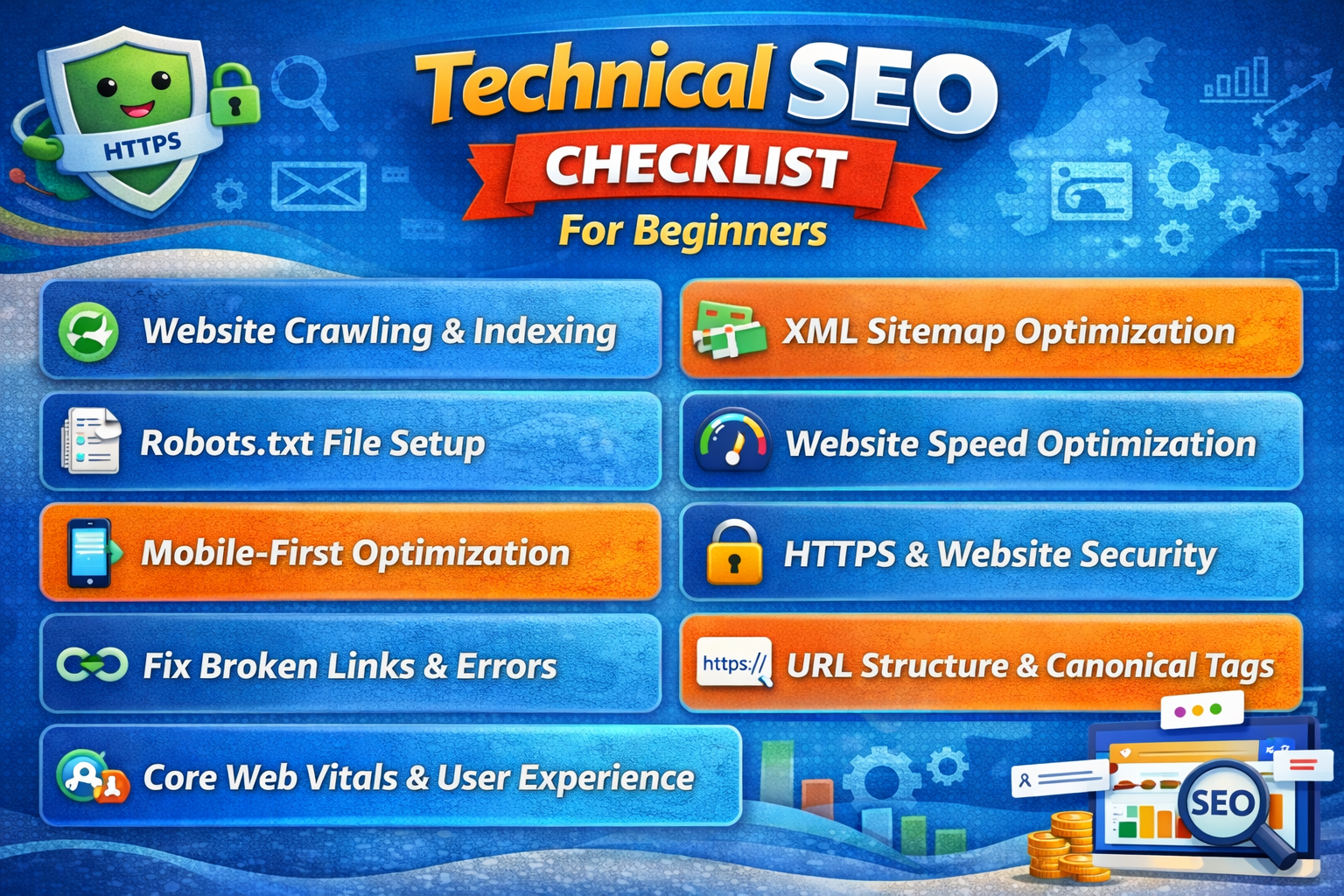
Google uses bots (Googlebot) to crawl and index websites.
✔️ Make sure your important pages are indexable
✔️ Avoid blocking pages in robots.txt
✔️ Use Google Search Console to monitor indexing status
📌 Tip: Every important page should be crawlable and indexable .
An XML sitemap helps Google understand your website structure.
✔️ Create a clean XML sitemap
✔️ Include only important URLs
✔️ Submit sitemap in Google Search Console
👉 A proper sitemap improves faster indexing .
Robots.txt tells search engines which pages to crawl or ignore.
✔️ Block unnecessary pages (admin, login pages)
✔️ Do not block important content accidentally
✔️ Keep robots.txt simple and clean
⚠️ A wrong robots.txt file can harm rankings.
Page speed is a major Google ranking factor.
✔️ Use fast and reliable hosting
✔️ Compress images
✔️ Enable browser caching
✔️ Minify CSS and JavaScript files
⏱️ Ideal loading time: Under 3 seconds
Google follows mobile-first indexing .
✔️ Responsive website design
✔️ Easy navigation on mobile
✔️ No horizontal scrolling
✔️ Clickable buttons and readable fonts
📱 More than 80% of Indian users browse on mobile.
Secure websites build trust and rank better.
✔️ Install SSL certificate (HTTPS)
✔️ Redirect HTTP to HTTPS
✔️ Avoid mixed content errors
🔒 HTTPS is mandatory for SEO in 2026.
Broken links create a poor user experience.
✔️ Fix 404 errors
✔️ Redirect broken URLs properly (301 redirects)
✔️ Remove unnecessary redirect chains
📌 Clean websites rank better and convert more.
Clean URLs help both users and search engines.
✔️ Short and keyword-rich URLs
✔️ Use canonical tags to avoid duplicate content
✔️ Avoid unnecessary parameters
Example:
✅ /technical-seo-guide-for-beginners
❌ /page?id=123&cat=seo
Core Web Vitals measure real user experience.
✔️ LCP (Largest Contentful Paint)
✔️ FID / INP (Interaction delay)
✔️ CLS (Visual stability)
Improving these signals improves rankings and engagement .
Schema helps Google understand your content better.
✔️ Article schema
✔️ FAQ schema
✔️ Business schema
📌 Schema increases chances of rich results in Google.
Avoiding these mistakes gives you a strong SEO foundation .
On-Page SEO | Technical SEO |
Content & keywords | Website structure |
Headings & meta tags | Speed & indexing |
Internal linking | Crawlability & security |
👉 Both are equally important for ranking.
If you want your website to:
👉 Then technical SEO is non-negotiable .
How to Rank Your Website on Google First Page in 2026
On-Page SEO Checklist for Indian Businesses 2026
Technical SEO means optimizing the technical structure of a website so that search engines like Google can easily crawl, index, and rank it. It focuses on things like website speed, mobile friendliness, security (HTTPS), site structure, and indexing.
Yes, absolutely. Technical SEO is very important for small and local Indian businesses because it improves website performance, mobile usability, and Google visibility. Without technical SEO, even good content may not rank well.
On-page SEO focuses on content, keywords, headings, and meta tags , while technical SEO focuses on website speed, mobile optimization, indexing, security, and site structure . Both are essential for achieving higher Google rankings.
Yes. Beginners can handle basic technical SEO tasks like submitting sitemaps, fixing broken links, improving page speed, and ensuring mobile friendliness using tools like Google Search Console, PageSpeed Insights, and SEO plugins , without advanced coding skills.
Technical SEO improvements usually start showing results within 2–6 weeks , depending on website size and issues. Fixing critical problems like speed, mobile usability, and indexing can lead to faster ranking improvements.


 Seo Admin
Jan 21, 2026
 Seo Admin
Nov 07, 2025
 Seo Admin
Apr 17, 2026
 Seo Admin
Dec 24, 2025
 Seo Admin
Jan 30, 2026