
Get a Customized Solution for Your IT Needs
+91 702-705-8777
info@pansofic.com
55-56, 1st floor, Chandigarh Complex, Prabhu Prem Puram, Ambala Cantt, Haryana 133006






Learn how Entity SEO helps Google understand brands, people, places, and topics beyond keywords to improve rankings, authority, and search visibility.
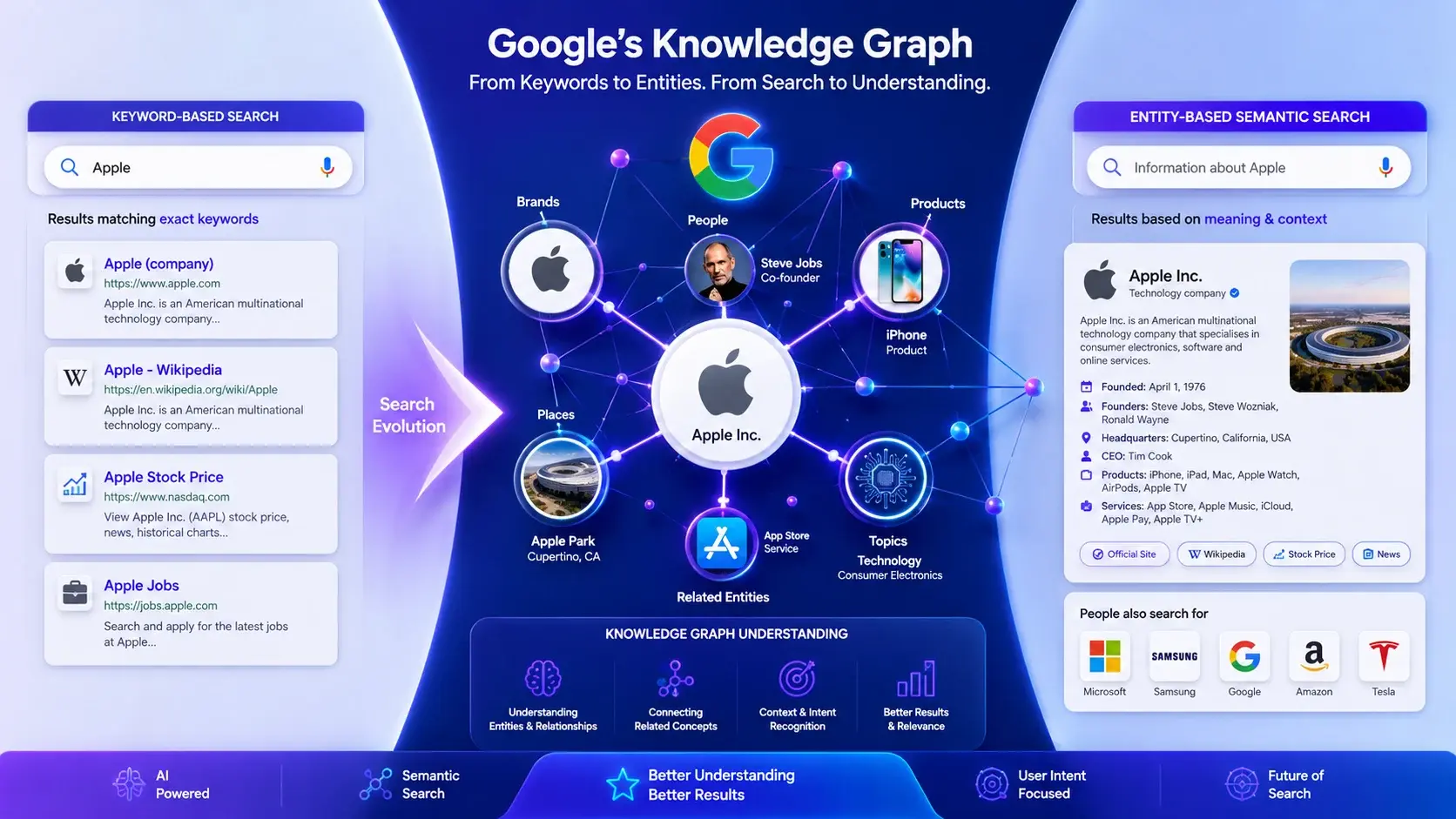
SEO practitioners have been obsessing about keywords and their importance for more than a decade. From keyword rich title tags, to keyword optimized meta descriptions, and endless linking building exercises with exact match anchor texts, everything revolves around keywords.
However, Google is already moving away from keyword-based search results to entity-based search results.
If you are still thinking in terms of keywords while your competitor is already leveraging the power of entities for better search rankings, you are already behind.
This shift in Google’s approach is arguably one of the biggest paradigm shifts in search in the last 15 years.
And most Indian digital agencies haven’t realized this yet.
An entity is a real-world object of a distinct and specific nature that has some value or meaning. It can be a person, a company, a place, a product, or an idea. So, Apple Inc. is an entity, whereas “Apple” is a keyword.
The main difference between keywords and entities is that keywords answer the question “What words did the user type?”, whereas entities answer the question “What does the user want to know about?”
For example, when you search for Tesla on Google, the search engine will not consider “Tesla” as a keyword but rather as an entity. That means that Google will know you are talking about:
● A car manufacturer
● Founded by Elon Musk
● Headquartered in California
● Known for electric cars
● A publicly traded company under the ticker TSLA
● And not about the famous physicist Nikola Tesla
The reason why Google can differentiate between various real-world objects is that they have distinct values and traits. In other words, Tesla is considered an entity because it has its own knowledge graph.
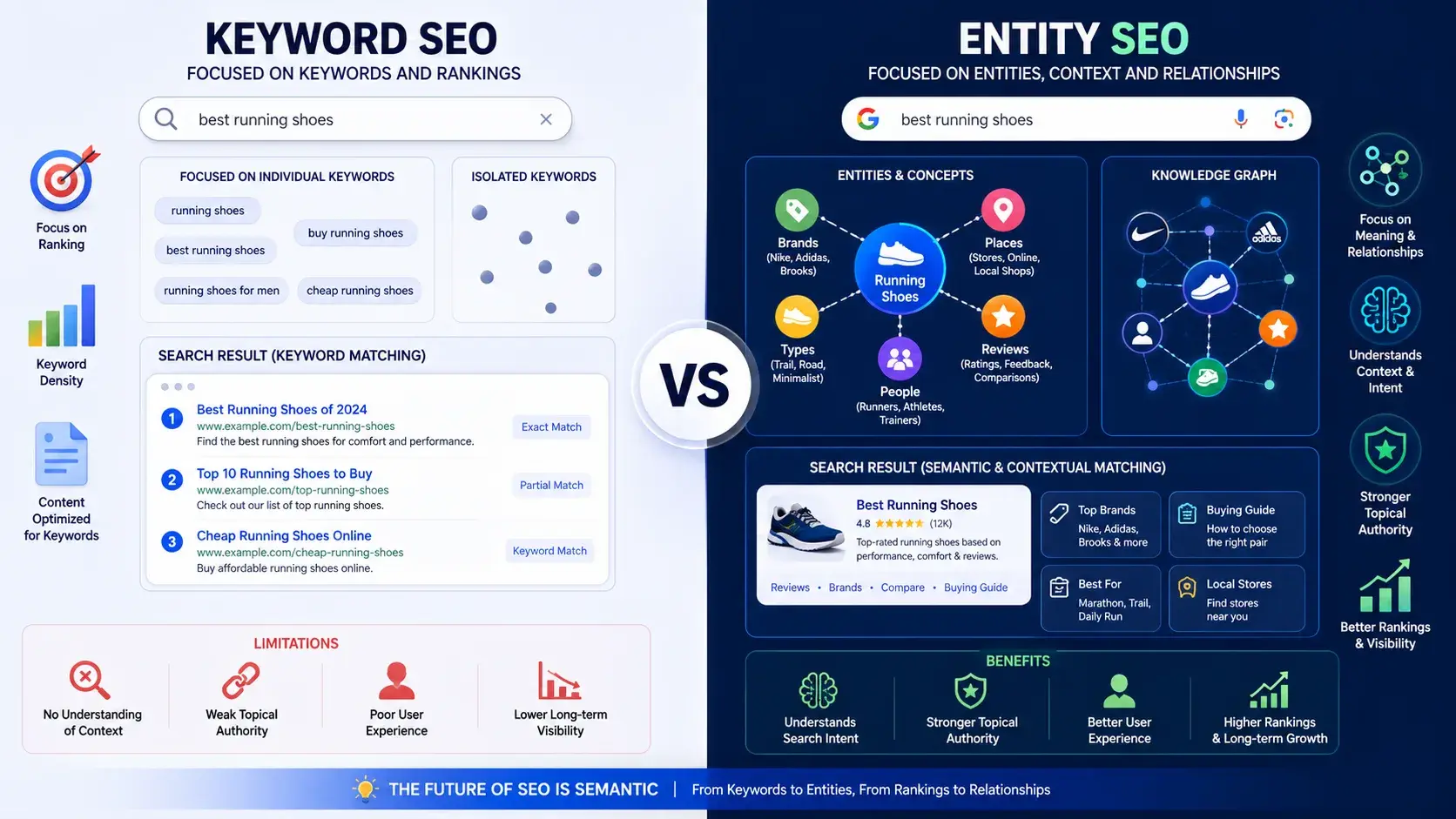
In 2012 Google launched the Knowledge Graph. With this update Google made it clear that they will no longer rely on keyword matching algorithm to rank web pages.
The Knowledge Graph is essentially a database of entities and their relationships. These are some of the statistics associated with the Google Knowledge Graph:
● 3.5 billion entities (and the number is growing)
● Relationships between different entities (e.g. Microsoft was founded by Bill Gates)
● Properties of each entity (e.g. Apple’s headquarters is located at 1 Apple Park Way)
● Context to distinguish between different entities
When you perform a search query on Google, your results are no longer dependent on the number of times a keyword appears on a web page. Instead, a search result is prioritized based on how well it describes a particular entity and its attributes.
For example, if you search “Apple headquarters,” you might get the following results:
● Entity information pane showing the address, phone number and photos of Apple’s HQ
● Related entities (e.g. Steve Jobs, Tim Cook, California)
● Rich snippets showing additional related information
This information is pulled from Google’s entity database, not from analyzing keywords on web pages.
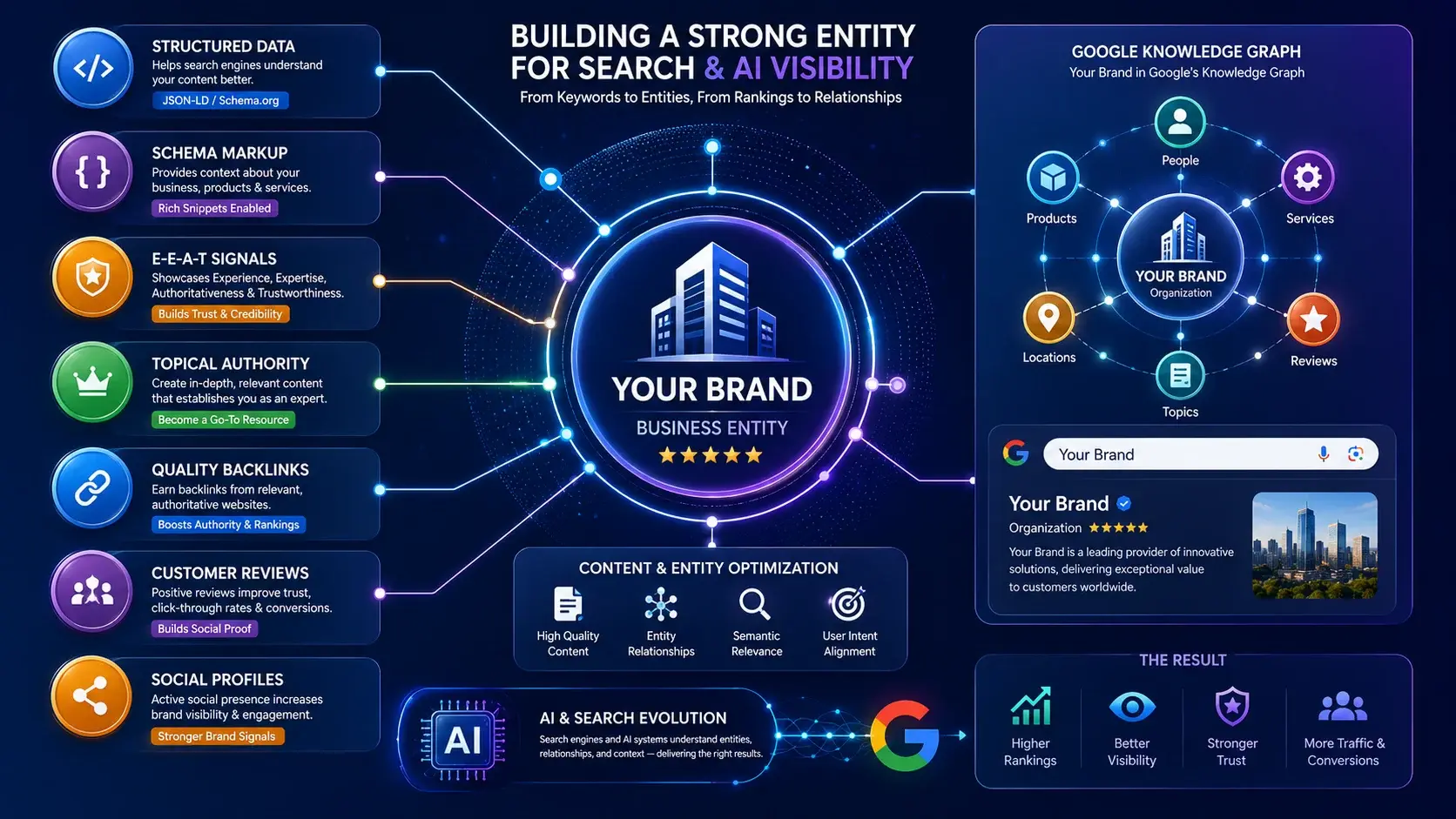
Semantic SEO is the practice of optimizing the website for meaning rather than keywords. Here are some examples of traditional SEO and semantic SEO:
Traditional SEO example:
● Target keyword: best iPhone 15 reviews
● Content strategy: write a page with best iPhone 15 review in the title, h1, and elsewhere on the page
Semantic SEO example:
● Target entity: iPhone 15 (with related entities: apple, iOS, camera, price)
● Content strategy: write an article about iPhone 15 entity and related entities such as competing products, features, and other relevant information
The semantic approach to SEO involves answering questions about the target entity such as what is this thing, what are its properties, how is it related to similar entities, and what are the common questions about this entity. Google has algorithms (such as BERT ) that can understand semantics and intent, so it is essential to optimize for semantics. Traditional keyword-based SEO will not work as well as semantic SEO, as Google can understand the intent behind queries much better than before.
Keywords are placed in natural text while entities are hidden in structured data.
Structured data (Schema markup) is machine code added to a website, which instructs Google about the entity with absolute precision. For instance, when one speaks of “Apple,” the search engine should know if it refers to the multinational corporation, the fruit, the tech giant, or even the music label.
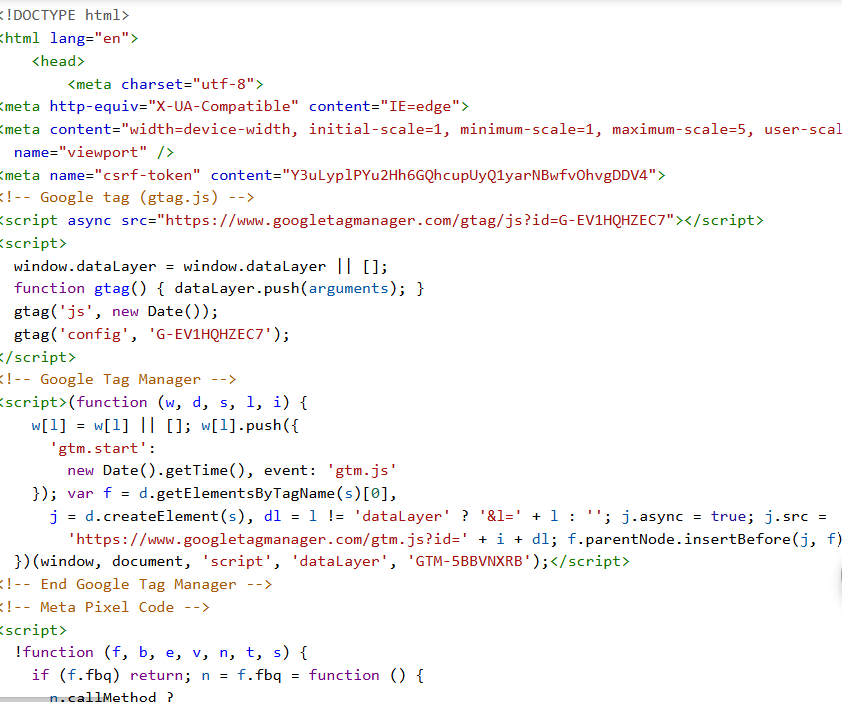
Prior to applying structured data markup:
Apple Inc. was founded in 1976 by Steve Jobs, Steve Wozniak, and Ronald Wayne.
After installing the Schema:
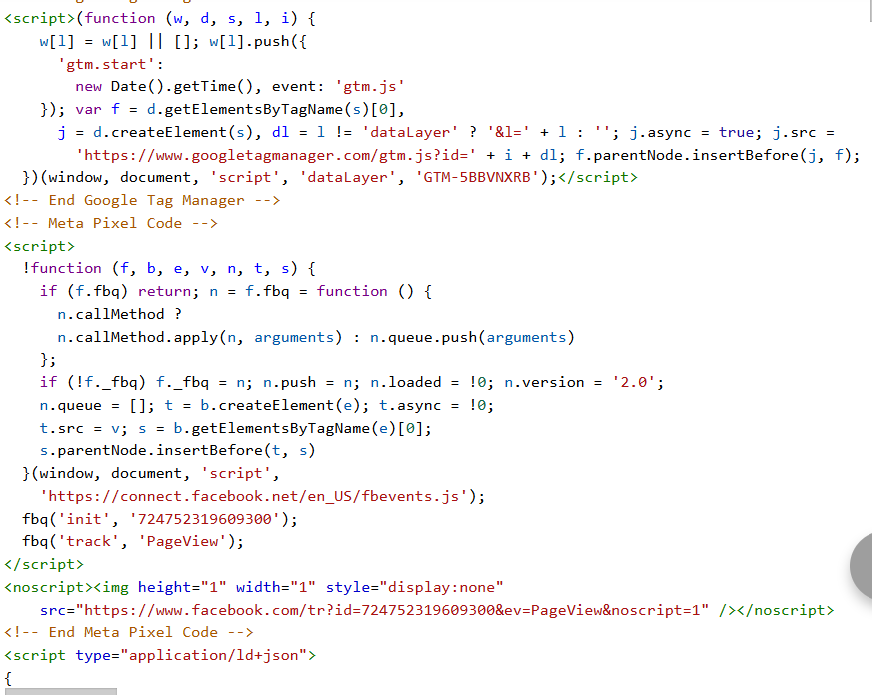
Json
{
“@context”: “https://schema.org”,
“@type”: “Organization”,
“name”: “Apple Inc.”,
“founding Date”: “1976”,
“founder”: [
{
“name”: “Steve Jobs”
},
{
“name”: “Steve Wozniak”
},
{
“name”: “Ronald Wayne”
}
]
}
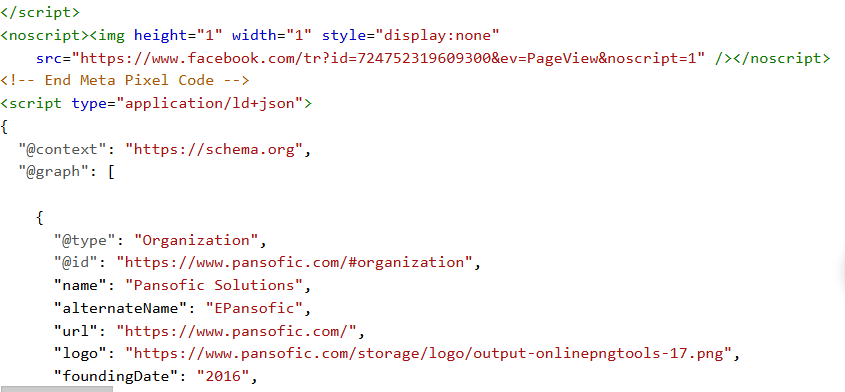
Now, Google does not need to guess if Apple is an organization and when and by whom it was founded. The search engine now knows it with a high level of certainty.
Schema.org offers a wide variety of applicable entities for brands. Some of the most common ones are:
● Organization – your business (name, logo, contacts, social links),
● Local Business – your physical locations (if any),
● Product – what you sell,
● Article – your content (blog posts, news, whitepapers), including the author, publishing date, and key topics/entities,
● Breadcrumb List – your website architecture/entities hierarchy.
Indian SEO agencies tend to ignore structured data markup as an optional task, while it is a must. Google Favors the correct entity markup by boosting its visibility
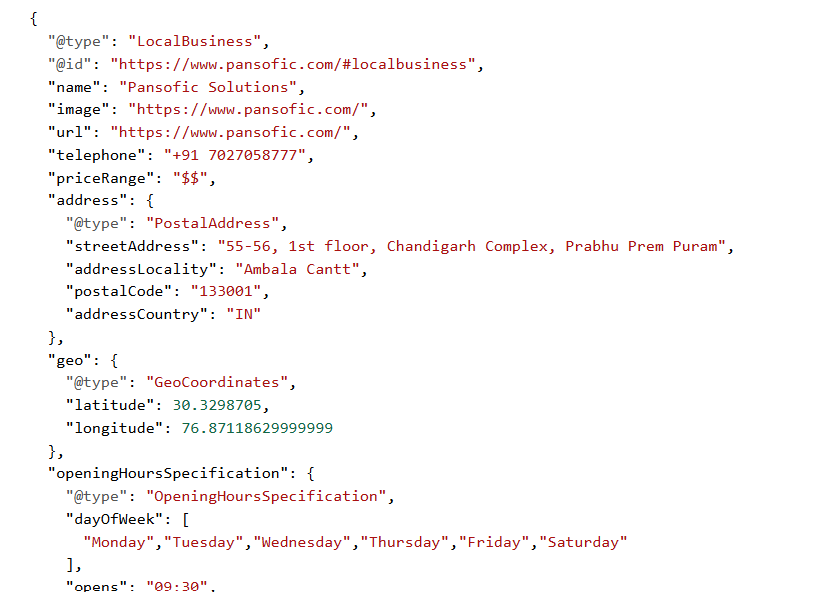
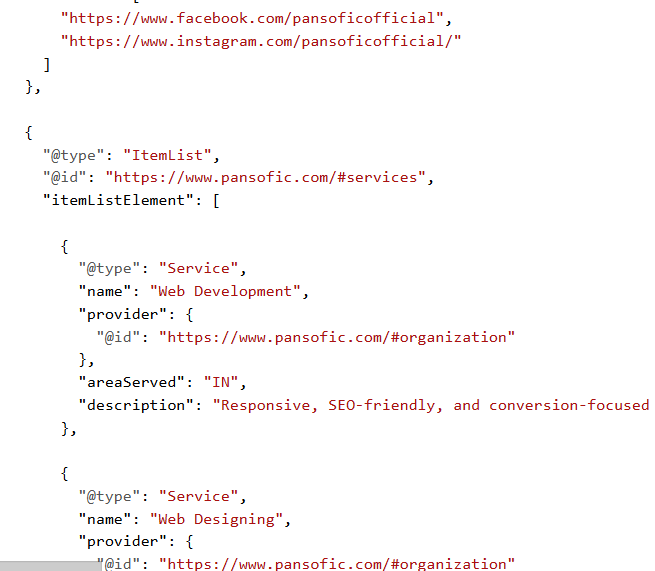
Structured data ( Schema markup ) is machine code added to a website, which instructs Google about the entity with absolute precision. For instance, when one speaks of “Apple,” the search engine should know if it refers to the multinational corporation, the fruit, the tech giant, or even the music label.
Prior to applying structured data markup:
Apple Inc. was founded in 1976 by Steve Jobs, Steve Wozniak, and Ronald Wayne.
After installing the Schema:
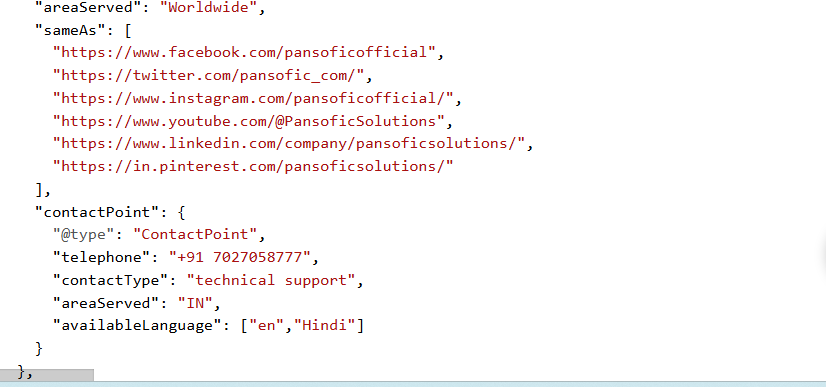
Json
{
“@context”: “https://schema.org”,
“@type”: “Organization”,
“name”: “Apple Inc.”,
“founding Date”: “1976”,
“founder”: [
{
“name”: “Steve Jobs”
},
{
“name”: “Steve Wozniak”
},
{
“name”: “Ronald Wayne”
}
]
}
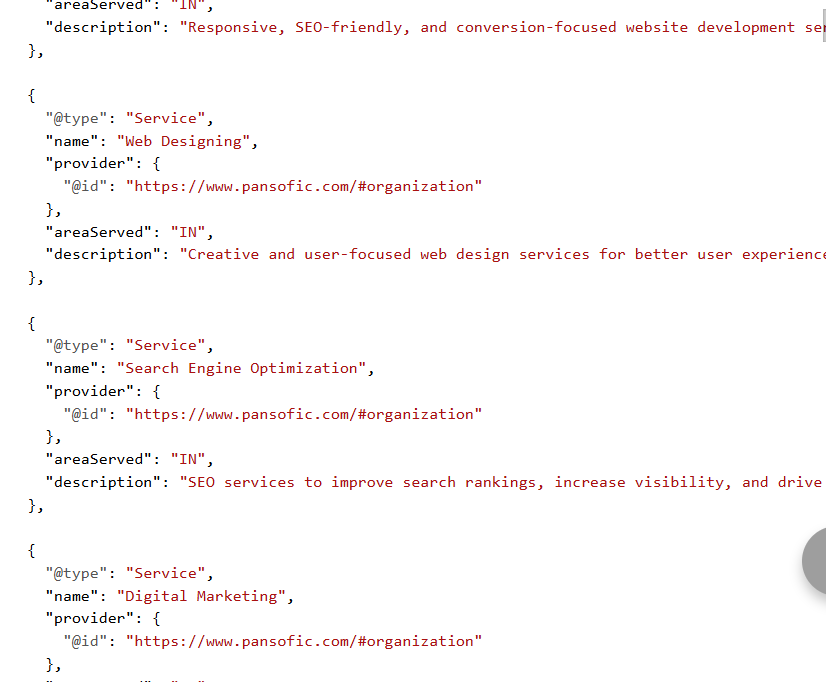
Now, Google does not need to guess if Apple is an organization and when and by whom it was founded. The search engine now knows it with a high level of certainty.
Schema.org offers a wide variety of applicable entities for brands. Some of the most common ones are:
● Organization – your business (name, logo, contacts, social links),
● Local Business – your physical locations (if any),
● Product – what you sell,
● Article – your content (blog posts, news, whitepapers), including the author, publishing date, and key topics/entities,
● Breadcrumb List – your website architecture/entities hierarchy.
Indian SEO agencies tend to ignore structured data markup as an optional task, while it is a must. Google Favors the correct entity markup by boosting its visibility
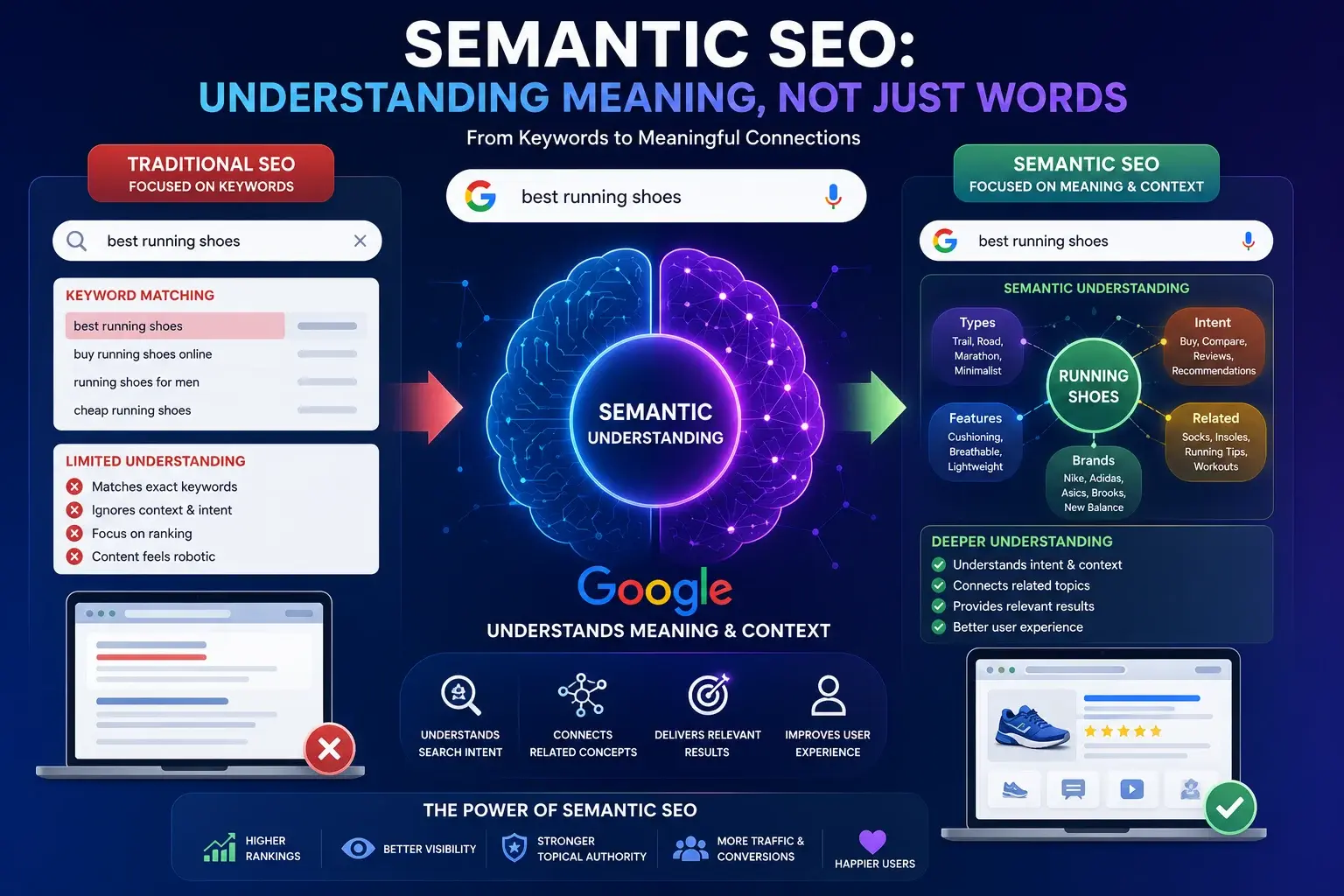
Your brand is an entity. The question is: does Google know about it?
A brand entity comprises of :
Entity Name - Your official business name
Entity Recognition-Whether Google differentiates your entity from related entities
Entity Properties - The typical attributes of the brand entity (industry, location, founded date, products)
Entity Relationships - The usual relationship of your brand entity to other entities (founders, investors, competitors, related brands)
Entity Authority - Whether your brand entity is dominant in any category
To strengthen your brand entity:
1.Claim and Optimize Your Knowledge Panel- Google will display a knowledge panel for entities they identify. For instance, if you have a Google business profile, Wikipedia page, or extensive online presence, there is a chance Google knows about you and your brand entity.
2. Build Inbound Links from Authoritative Entity Sources Claim your knowledge panel and ensure all the information is correct. The links from Wikipedia, industry directories, news sites, and government databases indicate that Google knows about your entity. You can improve your presence by getting listed in relevant directories.
3. Implement Comprehensive Organization Schema Mark Up Your Website With Organization Schema Use the Organization schema to specify your name, logo, founding date, founders, headquarters, social networks, and contact details.
4. Create Content That Reinforces Entity Identity Write content that describes, explains, and consistently reinforces your organization. Founders’ bios, mission statements, and histories are good examples of such content.
5. Establish Relationships with Other Entities Mention and link to other real organizations in your content. If you run a SaaS company, you can mention the software and programming languages you use. If you have partnerships with other organizations, mention them too. The more connections you have, the better your entity graph will be
Most agencies in India are still teaching SEO as keyword optimization.
Agencies worldwide and within India which are succeeding today have moved on to newer techniques including entities, semantic relevance, knowledge graph, structured data, authority building etc.
For your next client project:
The Future Is Entities
Google's recent advancements in AI ( LLMS ) only continue to fuel the fire towards entity-based search. Google's LLMs don't think in keywords, they think in concepts/entities.
With generative AI search, AI powered overviews, and future search formats, entity understanding will rule the roost.
SEO agencies and brands that make the switch to entity-based SEO now will dominate search in the coming years. Those who ignore this trend will be left behind.
The future of search is entities. And the future is now.
Ready to future-proof your SEO strategy?
Pansofic Solutions helps Indian brands and agencies make the switch from keyword heavy SEO to entity-based SEO.
Let's build your entity authority!

 Seo Admin
Jan 21, 2026
 Seo Admin
Nov 07, 2025
 Seo Admin
Apr 17, 2026
 Seo Admin
Dec 24, 2025
 Seo Admin
Jan 30, 2026