
Get a Customized Solution for Your IT Needs
+91 702-705-8777
info@pansofic.com
55-56, 1st floor, Chandigarh Complex, Prabhu Prem Puram, Ambala Cantt, Haryana 133006






Discover how Google AI Mode is transforming SEO in 2026. Learn proven strategies to optimise your website, create AI-friendly content, and rank higher in AI-generated search results. Expert tips by Pansofic Solutions.
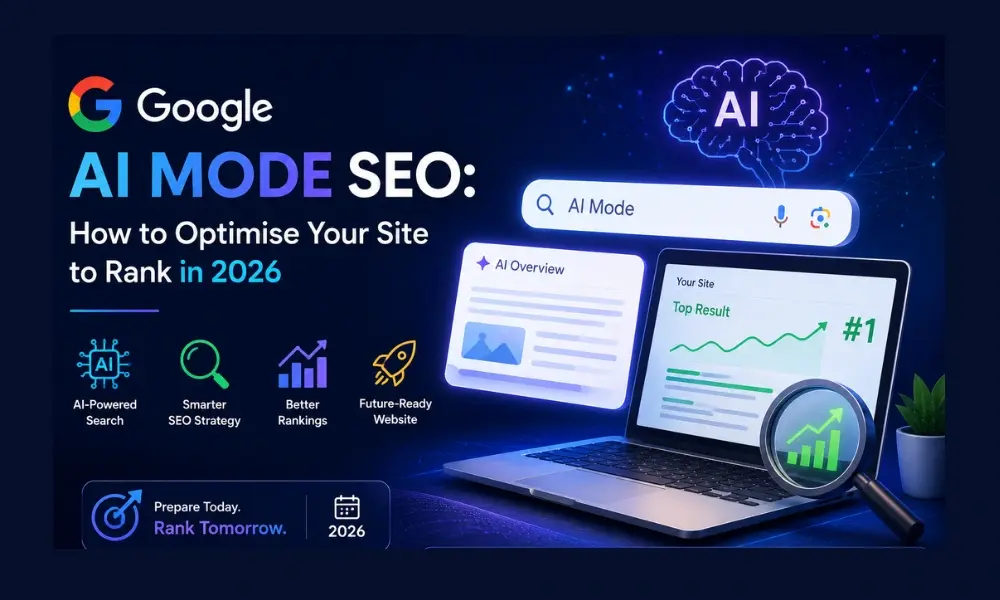
Search is no longer what it used to be. In 2026, when someone types a query into Google, they are increasingly met not with a simple list of blue links — but with a rich, AI-generated answer panel at the top of the page. This is Google AI Mode, and it is reshaping the entire landscape of search engine optimisation.
For businesses, digital marketers, and web developers alike, the question is no longer just 'how do I rank on Google?' The real question has become: 'how do I appear inside Google's AI-generated answers?' At Pansofic Solutions, we have been closely studying these shifts and helping our clients stay ahead of the curve. This blog is your complete guide to understanding Google AI Mode SEO and what it takes to rank in 2026.
Google AI Mode is Google's advanced AI-powered search experience, built on its Gemini model. Unlike traditional search results, AI Mode generates direct, conversational answers to user queries — pulling content from multiple trusted sources and presenting it as a cohesive, synthesised response.
Think of it as Google doing the research for the user. Instead of clicking through multiple websites, the user gets a summarised answer right there on the search page. The sources that feed these AI answers appear as cited references — and that is exactly where your website needs to appear.
Many people confuse AI Mode with AI Overviews (previously called Search Generative Experience). Here is the key distinction:
AI Overviews are short, automatic summaries that appear for select queries above organic results.
AI Mode is a dedicated, opt-in search experience offering deeper, multi-turn conversational answers.
AI Mode can handle complex, multi-part questions that traditional search cannot answer in one shot.
AI Mode is more aggressive in synthesizing content from fewer, highly trusted sources.
For SEO professionals, this means the bar for content quality, authority, and structure has been raised significantly.
Traditional SEO was about ranking in positions 1–10 on the search results page. With AI Mode, there is now a new 'Position Zero' — the AI-generated answer block — which appears before all organic results. If your content is not structured to feed into this block, you may be losing visibility even if you rank on page one.
Moreover, AI Mode rewards expertise, depth, and trustworthiness over keyword density or backlink volume alone. The content strategy required for AI Mode SEO is fundamentally different.
To consistently appear in Google AI Mode results, your website needs to satisfy a combination of content, technical, and authority signals. Here are the most critical ranking factors you need to focus on.
Google's E-E-A-T framework has always mattered, but in AI Mode, it is non-negotiable. The AI is trained to pull answers from sources that demonstrate real-world experience and deep knowledge.
Add author bios with credentials and professional background on every blog post.
Link to authoritative external sources to back up your claims.
Keep your content factually accurate and regularly updated.
Include first-hand case studies, real data, and original insights wherever possible.
At Pansofic Solutions, every piece of content we produce for clients follows a strict E-E-A-T checklist to ensure it meets AI search standards.
Structured data is the language that AI systems use to understand what your content is about. Without proper schema markup, AI Mode may simply overlook your content, even if it is excellent.
Key schema types to implement for AI Mode SEO:
Article / BlogPosting schema for all editorial content
FAQPage schema for question-and-answer sections
HowTo schema for step-by-step guides
Organisation and LocalBusiness schema for brand authority
BreadcrumbList schema for site structure clarity
Implementing these correctly requires technical expertise. Pansofic Solutions offers dedicated SEO services that include complete schema audit and implementation.
AI Mode does not just look for keywords — it evaluates whether your content thoroughly covers a topic. This is called topical authority, and it is built through semantic content depth.
What this means practically:
Cover the main topic AND all related subtopics in a single piece.
Answer secondary questions that a user might have after reading the main content.
Use natural language variations of your keywords, not just the exact phrase.
Structure content with clear hierarchies using H1, H2, H3, and H4 headings.
Google AI Mode still cares deeply about the technical health of your website. Pages that load slowly, have poor mobile experience, or fail Core Web Vitals are unlikely to be selected as AI answer sources.
In 2026, the three Core Web Vitals to optimise are:
Largest Contentful Paint (LCP): Should be under 2.5 seconds.
Interaction to Next Paint (INP): Should be under 200 milliseconds.
Cumulative Layout Shift (CLS): Should be under 0.1.
Use Google PageSpeed Insights and Google Search Console regularly to monitor and fix performance issues.
Content is still king — but the type of content that works for AI Mode SEO is different from what ranked in 2020. Here is how to rethink your content strategy.
It might seem counterintuitive, but the best way to rank in AI Mode is to write content that genuinely helps real people. AI systems are trained to recognise and reward helpfulness, clarity, and accuracy.
Practical tips for human-first content:
Use short paragraphs (2–4 sentences maximum per paragraph).
Write at a readability level that most adults can follow easily.
Avoid jargon unless you are writing for a technical audience.
Use bullet points, numbered lists, and subheadings to break up text.
Start with the most important information, not background context.
Google AI Mode is fundamentally an answer engine. It is looking for content that directly answers questions. This means your content structure should prioritise direct answers early in the text.
The best-performing format for AI Mode is the 'Answer-First' structure:
Start the section with a 1–2 sentence direct answer to the implied question.
Follow with supporting explanation, context, and examples.
End with actionable takeaways or a summary statement.
This approach also helps with featured snippets, voice search, and other zero-click search formats.
Long-form pillar content — comprehensive guides that cover a topic in full — is one of the most powerful formats for AI Mode SEO. Google AI tends to cite longer, more thorough pieces because they provide greater value to users.
A well-structured pillar article should:
Be at least 2,500 words (ideally 3,000–5,000 words for competitive topics).
Cover all major subtopics related to the main keyword.
Include an FAQ section at the end to capture question-based queries.
Link internally to related pages and externally to authoritative sources.
Be updated every 3–6 months to maintain freshness signals.
Because AI Mode is conversational, the keywords that trigger AI answers are often phrased as questions or natural language queries — not just short head terms.
Keyword examples that perform well in AI Mode:
'How to optimise a website for Google AI Mode in 2026'
'What is the best SEO strategy for AI search results?'
'Why is my website not appearing in Google AI answers?'
Use tools like Google's People Also Ask, Answer the Public, and SEMrush's Question Research to identify these long-tail conversational queries.
You can have the best content in the world, but if your technical SEO is broken, AI Mode will not be able to properly crawl, understand, or cite your website.
Before anything else, make sure Google can actually access your content:
Check your robots.txt file to ensure important pages are not accidentally blocked.
Submit an XML sitemap via Google Search Console.
Fix broken links, redirect chains, and 404 errors regularly.
Use canonical tags to prevent duplicate content issues.
Google indexes the mobile version of your website first. In 2026, if your site is not fully mobile-optimised, it will struggle to appear in both traditional and AI search results.
Use responsive design with fluid layouts and flexible images.
Test every page on multiple screen sizes using Google's Mobile-Friendly Test.
Ensure tap targets (buttons, links) are large enough for touchscreen use.
Avoid intrusive interstitials or pop-ups that block content on mobile.
A secure website is a basic trust signal for both users and AI systems. Ensure your entire website runs on HTTPS. Google's AI is unlikely to cite websites that appear unsafe or untrustworthy.
Keep your CMS, plugins, and themes updated to the latest versions.
Implement a strong Content Security Policy (CSP).
Use Google Search Console's Security Issues report to identify any detected problems.
A strong internal linking structure helps AI systems understand the relationship between your content pieces. This builds topical authority signals across your website.
Link from high-authority pages (like your homepage) to important blog posts and service pages.
Use descriptive anchor text that reflects the target page's topic.
Create content hubs — a pillar page linked to several cluster posts on related topics.
Avoid orphan pages (pages with no internal links pointing to them).
One of the most underappreciated factors in AI Mode SEO is brand authority. Google's AI system prefers to cite brands and websites that are already recognised as trusted experts in their field.
High-quality backlinks from reputable websites signal to Google that your content is worth citing. In AI Mode SEO, the quality of backlinks matters far more than quantity.
Aim for links from industry publications, news sites, and academic institutions.
Get featured on authoritative round-up lists and expert directories.
Produce original research or data that other websites will naturally cite.
Publish guest posts on high-authority blogs in your niche.
Even unlinked mentions of your brand name across trusted websites contribute to your brand authority score. Strategies to build brand mentions:
Be active on industry forums, communities, and Q&A platforms like Quora and Reddit.
Encourage satisfied clients to leave detailed reviews on Google Business Profile.
Participate in podcasts, webinars, and industry events as a speaker or expert.
Maintain active, consistent profiles on LinkedIn, Twitter/X, and other platforms.
If you serve local customers, your Google Business Profile is directly connected to AI Mode local answers. A fully optimised GBP significantly improves your chances of appearing in AI-generated local search responses.
Complete every section of your profile — name, address, phone, hours, services.
Add high-quality photos of your premises, team, and work.
Post regular updates, offers, and news directly on your GBP.
Respond to every review — positive and negative — professionally.
One of the challenges marketers face with AI Mode SEO is attribution — it is not always easy to know if a conversion came from an AI-cited result. However, there are several ways to track your performance effectively.
Google Search Console remains the most reliable first-party data source. Monitor:
Impressions and click-through rates for your target keywords.
Pages that are gaining or losing visibility in organic search.
Queries that trigger AI Overviews where your page appears.
Core Web Vitals scores across mobile and desktop.
Manually test your target keywords in Google AI Mode and note which sources are being cited. Track this weekly for your key topics and compare with competitor visibility.
Some useful third-party tools for AI visibility tracking include:
BrandMentions for monitoring where your brand appears online.
Semrush AI Toolkit for tracking AI-generated SERP features.
Ahrefs for content gap analysis and backlink monitoring.
Traditional KPIs like 'rank position 1 for keyword X' need to evolve for AI Mode. More relevant metrics to track in 2026:
Frequency of brand citation in AI Mode results for target topics.
Growth in organic impressions from informational/question-based queries.
Increase in direct traffic (a sign of growing brand recognition).
Conversion rate from organic traffic — quality over quantity.
As with any evolving field, there are pitfalls that can set your strategy back. Here are the most common mistakes businesses make when trying to optimise for Google AI Mode.
Mistake 1: Over-Stuffing Keywords
Keyword stuffing was counterproductive even before AI Mode — now it is actively harmful. AI systems are trained to detect and penalise content that feels forced or unnatural. Focus on topic coverage, not keyword repetition.
Mistake 2: Ignoring Structured Data
Skipping schema markup is one of the costliest technical SEO mistakes. Without structured data, AI systems have to guess what your content is about. Schema markup removes all ambiguity and gives AI a clear, machine-readable signal.
Mistake 3: Publishing Thin or Duplicate Content
AI Mode has no patience for thin pages or duplicate content. Every page on your website should serve a clear, unique purpose. Consolidate or remove low-value pages to improve your overall site quality signal.
Mistake 4: Neglecting Content Updates
AI Mode heavily favours fresh, up-to-date content. A blog post from 2022 that has never been updated will rarely appear in AI answers in 2026. Set a regular content refresh schedule for your most important pages.
Mistake 5: Treating AI Mode SEO as Separate from Traditional SEO
AI Mode SEO is not a replacement for traditional SEO — it is an evolution of it. The fundamentals still apply: good content, strong backlinks, fast website, proper structure. Build on these foundations, do not abandon them.
At Pansofic Solutions, we have built our digital marketing services around the realities of modern search — including the rapid rise of AI Mode SEO. Our team of SEO specialists, content writers, and web developers works together to create a holistic strategy that covers every aspect of AI search optimisation.
Our AI Mode SEO services include:
Comprehensive website audit covering technical SEO, content gaps, and schema markup.
Content strategy development focused on topical authority and answer-led formats.
On-page SEO optimisation including E-E-A-T enhancement and internal linking.
Schema markup implementation and structured data testing.
Monthly performance reporting with AI Mode visibility tracking.
Whether you are a small business trying to get found locally or a large enterprise looking to dominate AI search in your industry, Pansofic Solutions has the expertise and the tools to make it happen.
Frequently Asked Questions (FAQs)
Q1. What is Google AI Mode SEO and why does it matter in 2026?
Google AI Mode SEO refers to the practice of optimising your website to appear as a cited source within Google's AI-generated answer panels. It matters in 2026 because AI Mode is rapidly replacing traditional search results for many query types. If your content is not structured to meet AI standards, you risk losing visibility even if you currently rank well in conventional search results.
Q2. How is AI Mode optimisation different from traditional SEO?
Traditional SEO focuses on ranking pages in the standard blue-link results. AI Mode optimisation goes further by ensuring your content is structured, authoritative, and comprehensive enough for Google's AI to cite it directly. This means greater emphasis on E-E-A-T signals, structured data, semantic content depth, and answer-led writing formats rather than simple keyword targeting.
Q3. Does structured data really help in ranking for Google AI Mode?
Yes, structured data plays a significant role in AI Mode SEO. Schema markup gives Google's AI a clear, machine-readable understanding of your content type, subject, and credibility. Pages with proper structured data — such as FAQPage, Article, and HowTo schemas — are more likely to be parsed and cited by the AI engine than pages without it.
Q4. How long does it take to see results from AI Mode SEO optimization?
AI Mode SEO typically takes 2–4 months before you notice meaningful improvements in visibility and traffic. The timeline depends on your website's current authority, the competitiveness of your target topics, and the depth of optimization applied. Quick technical wins like fixing crawl errors and adding schema markup can show faster results, while content authority builds over time.
Q5. Can small businesses compete in Google AI Mode search results?
Absolutely. Small businesses can compete effectively in AI Mode by focusing on local and niche topics where large competitors may have less presence. By consistently producing high-quality, well-structured content that addresses specific audience questions, earning local citations, and maintaining a strong Google Business Profile, small businesses can earn visibility in AI-generated answers within their target markets.
Conclusion
Google AI Mode is not a passing trend — it is the new foundation of how billions of people will search for information, products, and services. In 2026 and beyond, the businesses that invest in Google AI Mode SEO today will enjoy a significant competitive advantage over those that continue to rely solely on traditional SEO tactics.
The path to AI Mode visibility is built on the same principles that have always driven good SEO — helpfulness, authority, accuracy, and technical excellence. What has changed is the level of depth and structure required. AI systems are more sophisticated than ever, and they reward content that truly serves the user.
Start with a strong technical foundation, develop authoritative content that answers real questions, implement structured data, and consistently build your brand's digital authority. If you need expert guidance to navigate this new landscape, Pansofic Solutions is here to help — from strategy and content to development and analytics.
The future of search is AI. Make sure your website is ready for it.


 Seo Admin
Jan 21, 2026
 Seo Admin
Nov 07, 2025
 Seo Admin
Apr 17, 2026
 Seo Admin
Dec 24, 2025
 Seo Admin
Jan 30, 2026