
Get a Customized Solution for Your IT Needs
+91 702-705-8777
info@pansofic.com
55-56, 1st floor, Chandigarh Complex, Prabhu Prem Puram, Ambala Cantt, Haryana 133006






Google’s September 2026 Spam Update signals a stronger focus on useful, trustworthy and human-verified content. This blog explains why rankings may decline, how Google evaluates real user value, why tools and interactive content matter, and how businesses can audit authors, fact-check AI content, improve page usefulness and prepare for future updates.
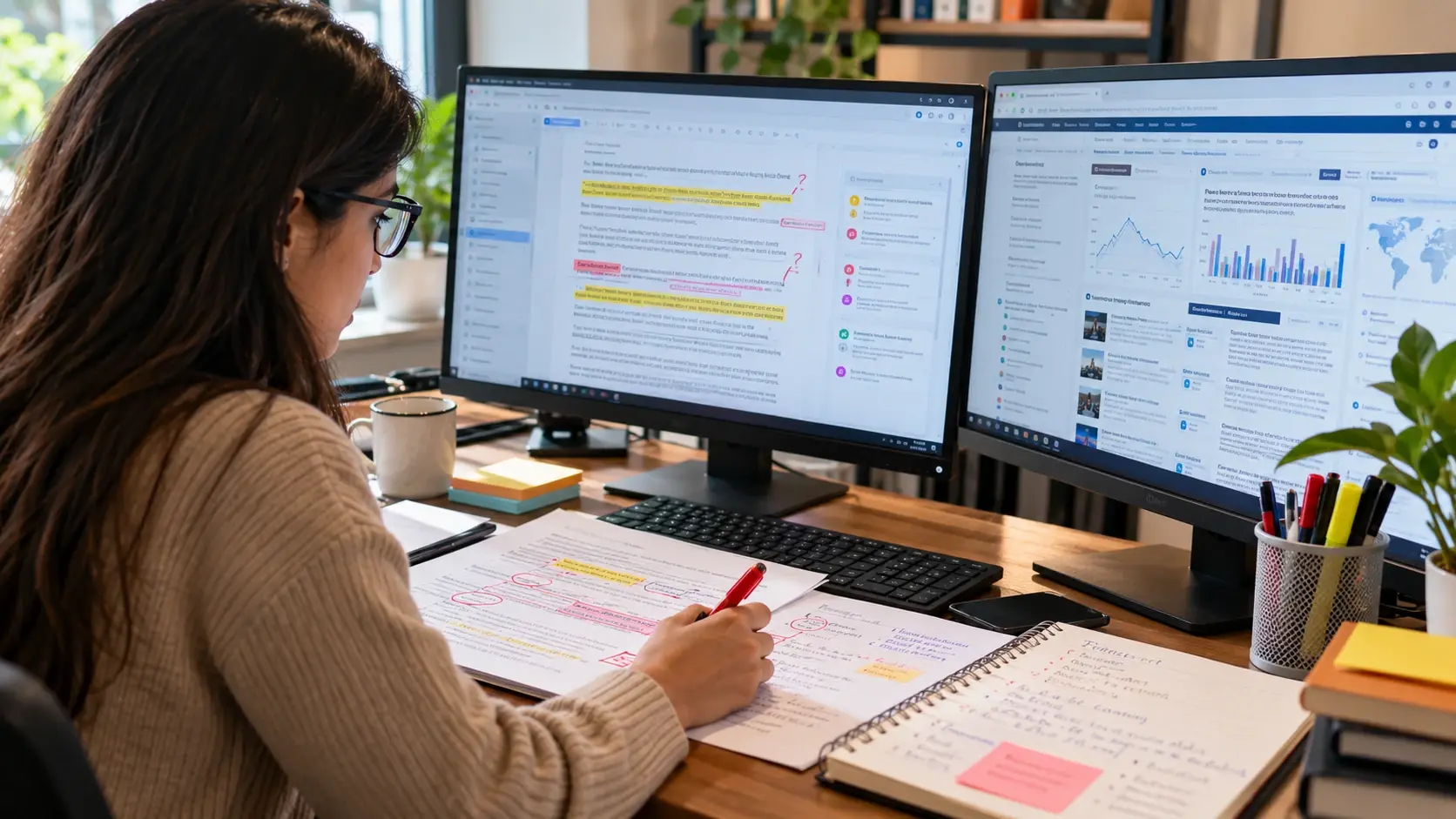
I was auditing a client's site last week when I noticed something that made me pause.
For three months, their organic traffic had been on a downward trend. Not dramatically, just a slow, quiet erosion. The kind you don't notice you've fallen until you've fallen. I checked their Search Console and found the reason: dozens of keywords that used to be on page one were now on page three or four. Others had been completely eliminated from the results.
"Did we get hit by a Google update?" the client asked.
The answer was complicated. Yes, they had been impacted by Google's September spam update. However, this wasn't the issue. The true question was what that update was indicating and what it was saying about the way Google is fundamentally changing search.

Google just released its fourth spam update for 2026. At first glance, it seems to be another algorithm adjustment to weed out poor websites. If you've been following these changes as long as I have, you know something bigger is going on. And most sites aren't ready for it.
I've been doing this work since 2016. I was here for Panda. I survived Penguin. I've seen BERT roll out and how the Page Experience Update has changed the way I think about technical SEO. All of those felt like big things at the time.
What I have learned, however, is that spam updates are like a warning bell. They don't happen in isolation. If Google is going to be aggressive about low-quality content, it's likely that they're preparing for something bigger.
Google launched a spam update in March of 2019. By October, BERT was rolling out, a huge change in Google's understanding of search intent. Spam and core updates were almost happening simultaneously in 2022, indicating a significant shift in ranking factors.
The four spam updates in one year, growing in intensity, is a sign to me that Google is preparing the ground.
They are trying to eliminate the noise in order to reorganize what remains according to new principles.
A few SEO pros think that a core update might be coming before the holidays. Google hasn't officially said so, but the guidance they've released with the spam update gives you a clear idea of what they're rewarding and what they're penalizing.
Three Things Google Is Making Very Clear
Google used to pay pages for ranking for keywords. They created their entire ranking system around the premise that if your page contained the same words as the query, then it was likely to have the answer.
That era is over.
Google now explicitly says that the quality of the page relies on the quality of the main content that actually answers the question that the user had. Not "answered the question." Solves the problem.
There is a difference, and it counts.
I audited a fitness niche client that had been ranking for years for "best HIIT workouts". Their page looked great on paper:
However, when I examined their data from their Search Console, I noticed something concerning: a 67% bounce rate. Two-thirds of visitors were landing on this page and bouncing.
So I asked myself the obvious question: "What are people doing when they arrive here?"
The solution: They were reading the intro, skimming past the listicle of workouts, and leaving because they wanted a program, not a list.
How We Fixed It:
We redesigned it. Instead of a listicle, we built out a 12-week progressive HIIT program. Retained the text but rearranged it. Included video examples of each exercise. They included printable PDFs that they could download. Made the whole thing actionable, not just informational.
The Results:
And the rankings improved not because we optimized more keywords, but because Google realized that people were actually happy with the page.
That's the shift. User satisfaction is no longer a by-product. It's the main ranking factor.
This is the one that surprises most SEOs.
The new guidance from Google makes it clear that the following are all acceptable forms of main content:
Not supplementary. Not decorative. Main content.
However, when I audit websites, I see most of them still consider these to be nice-to-haves. They will include a stock photo or embed a video from YouTube, but the actual "main content" remains text.
That's leaving out ranking power
I was employed with a B2B software company that sold project management software. They were losing the battle to rivals for all of the major keywords. The number of words in both sites was comparable. They both had a good number of backlinks. They both contained keywords throughout.
What was the difference?
The competitor had created an interactive Gantt chart calculator right on their page. The visitor could enter the project parameters and get a sample timeline in the same place, without having to leave the page. That was no decoration. It was the main content. It was of immediate use and benefit.
Google ranked it higher because it was more useful. That was detected by the search algorithm via behavioral signals:
When I proposed building something like that, the client was hesitant. "Isn't that expensive? Wouldn't this detract from the content?"
I said to them, "The tool is the content. It's a solution that is faster than 3,000 words ever could be."
How We Implemented It:
We created an interactive comparison table. Users were able to:
The Results:
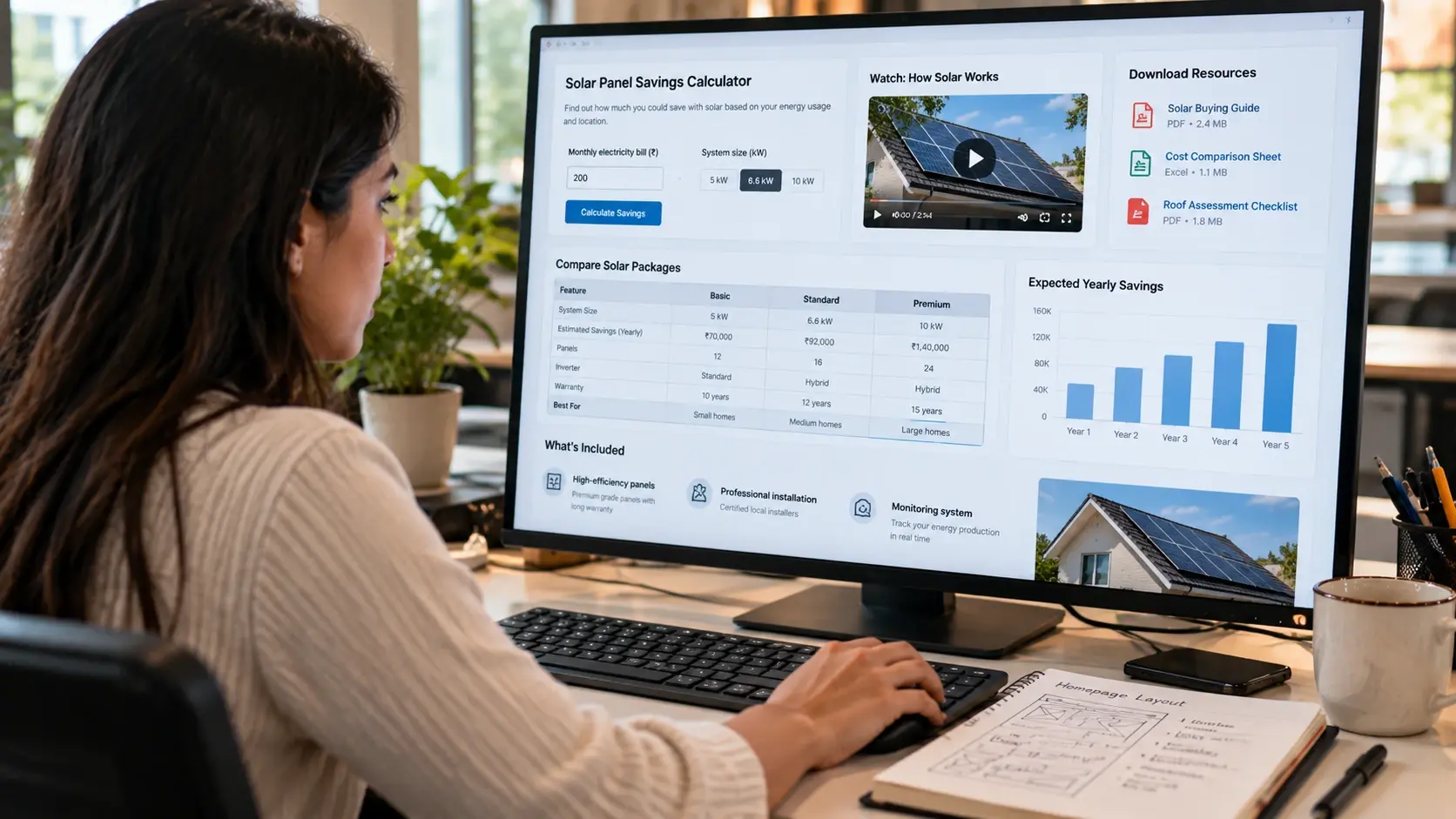
A higher conversion rate was achieved because those who used the tool were more aware of whether the product was suitable for them or not
If your page is just a written explanation, but a calculator, template, tool or original research would be more useful, you're leaving ranking authority on the table. Google will see it, and your visitors will see it.
I see this a lot, and it's a sign that a site is not designed for human users; it's designed for search engines:
Instead of this: "Best SEO Tools for 2026"
Write this: "How Our SEO Tools Save You 12 Hours Per Week"
The first one is keyword optimization. The second is a real heading that tells readers what they'll learn.
Google is now interpreting the headings as an indicator of whether a site is designed for humans or for search engines. And they're getting better at detecting the difference.
A real heading should:
The Test:
Take all the headings off a page. Is it possible to still get the structure and what each part is from the text?
I have noticed that pages with descriptive headings that focus on the reader's needs, tend to rank higher than pages with keyword-stuffed headings, even if the content is the same. Google is aware that users are getting what they are looking for, remaining on the page, and interacting with the content.
This is where it gets awkward.
Google just identified fake author profiles as a clear low-quality signal. I've been seeing pages that are just:
A stock photo
A generic bio: "Himanshi is a 10-year digital marketer passionate about helping businesses grow."
Look that name and description up on LinkedIn. Himanshi doesn't exist.
Google catches this. Their systems are advanced and are able to identify discrepancies between what is said and what is substantiated. Fake author profiles don't just fail to establish trust; they also convey that the content isn't trustworthy.
However, the bigger problem is that AI-generated content must be fact-checked by humans before it can be published. Not review. Not editing. Fact-checking. Confirmation of statements, figures and recommendations.
I was collaborating with a B2B company that was creating product comparison posts with an LLM. Fast. Efficient. They would read them through and publish.
Then a customer left a comment pointing out that:
Google's algorithm picked up on this. Their traffic from organic search began to drop, but not immediately, after a month. Due to the lack of reliability of the content.
How We Rebuilt Their Process:
That's what Google is looking for.
Avoid waiting for the next core update. Here are some things you can do now.
Check each author byline on your site. Ask yourself honestly:
If any of these answers is no:
Read the top 20 pages as if you were the customer.
Ask yourself:
In the process:
Recognize pages where the reader would benefit from the presence of:
Don't add these for SEO points. Include them because they are needed by your audience. The ranking will be improved as a by-product.
The pattern is consistent after auditing hundreds of sites with various Google updates:
Websites that focus on their users and search engines as a secondary concern tend to win or maintain ground.
Sites that build for Google and hope that people will follow, always lose.
Google will find your content and rank it lower if it's created just for a keyword. If the content is actually needed by the users, and the keywords just so happen to fit, you'll be okay. That's not bad, you will likely get better.
The spam update that is rolling out now is getting the job done. The bigger update likely coming in November is going to reorganize what's left based on this principle:
I have been doing this long enough to know when there are inflection points. We're on the same page right now.
What was effective for SEO in 2023 will seem like a quaint strategy in 2027. Not because Google's being arbitrary, but because search is evolving. The sites that will be successful will be the ones that began adapting in October 2026, not the ones that waited until they were losing traffic.
We can assist companies in preparing for this time at Pansofic Solutions. We:
Ensure that your site doesn't lose ground, but rather gains ground, when the next update comes
We've assisted dozens of companies with significant ranking changes. We have done it with Panda, Penguin, BERT, and every update since 2016.
If your organic traffic matters to you, now's the time to make sure you're ready.


 Seo Admin
Jan 21, 2026
 Seo Admin
Nov 07, 2025
 Seo Admin
Apr 17, 2026
 Seo Admin
Dec 24, 2025
 Seo Admin
Jan 30, 2026