
Get a Customized Solution for Your IT Needs
+91 702-705-8777
info@pansofic.com
55-56, 1st floor, Chandigarh Complex, Prabhu Prem Puram, Ambala Cantt, Haryana 133006






Discover why Search Everywhere Optimization (SEO 2.0) is the future of digital marketing. Learn how to rank across AI search, social media, YouTube, marketplaces, and more.
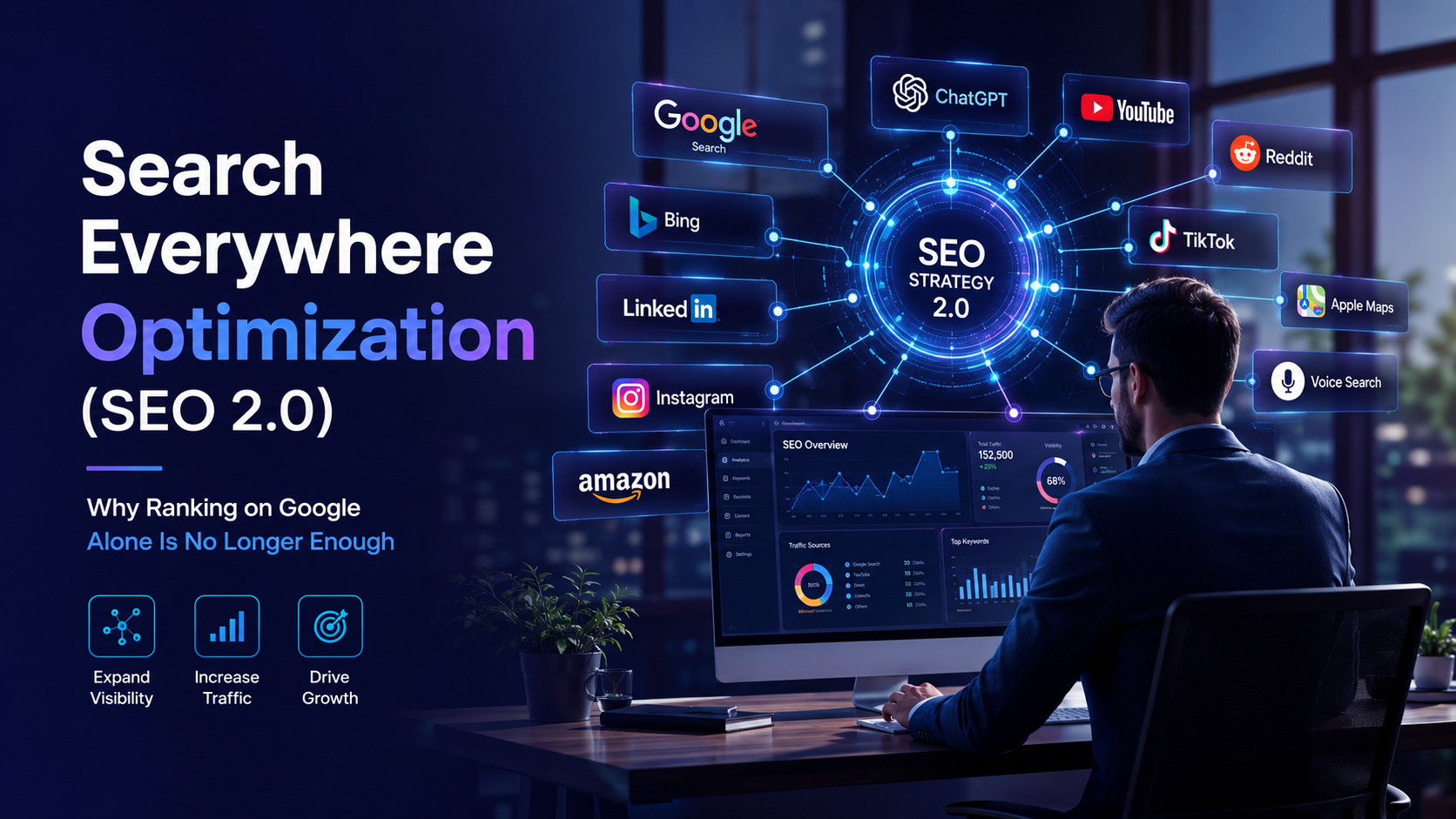
For twenty years, SEO meant one thing: ranking on Google. A business's online visibility hinged on one metric: search engine ranking position. If you ranked #1 for important keywords, success followed.
That era is ending.
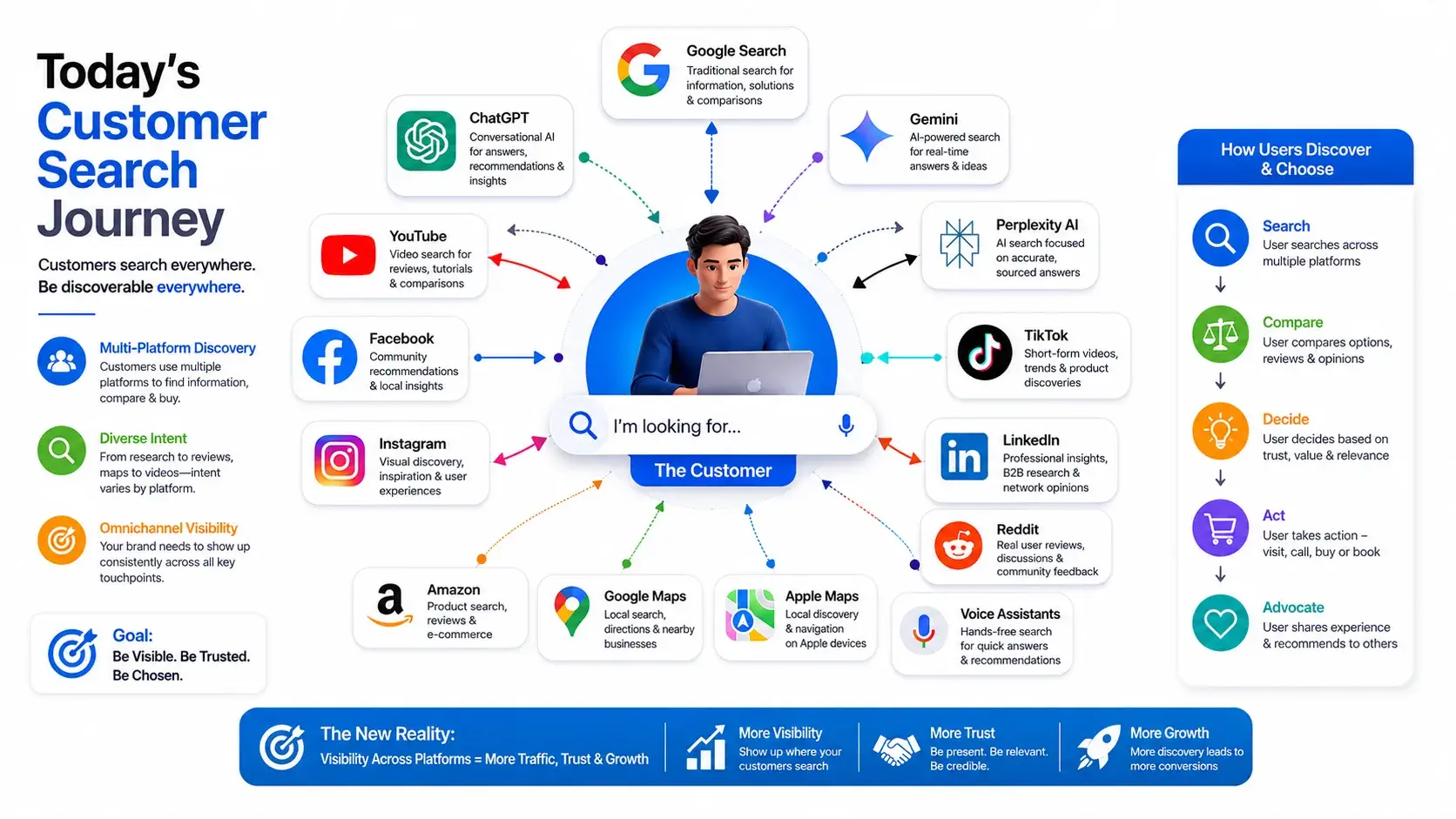
Today, people search differently. They use Google, but also ChatGPT, YouTube, TikTok, Instagram, Amazon, Reddit, and specialty search engines. They ask questions in messaging apps, voice assistants, and AI chatbots. Information discovery happens across dozens of platforms and interfaces.
Search Everywhere Optimization (SEO 2.0) recognizes this fragmented reality. It's about being visible wherever your audience searches—not just Google, but everywhere they look for information, products, and services.
Understanding why traditional SEO focus is limiting helps explain the shift.
Google's decreasing search share: While Google maintains dominant search volume, its market share has declined in key demographics and use cases. Gen Z increasingly discovers products on TikTok and Instagram. Researchers might use specialized AI search engines. Product shoppers start on Amazon. The perception that "Google is search" no longer matches reality.
The fragmentation of discovery: People no longer follow a single path to find information. A customer researching a product might use the following:
Google for general information
AI search engines for synthesized answers
Each touchpoint matters. Missing any creates incomplete visibility.
Ranking visibility changes: Even if you rank #1 on Google, that doesn't guarantee visibility. Google AI Overviews might synthesize answers from competitors. Featured snippets might answer the question without driving clicks. Local pack results might dominate, pushing organic results below the fold.
Omnichannel customer expectations: Today's customers expect information across channels. They might start on social media, research on YouTube, compare on Google, read reviews on a business platform, and buy through an app. Businesses must be visible across this entire journey.
Diminishing SEO ROI in saturated markets: In competitive industries, traditional SEO investment yields lower returns. The cost to rank #1 for valuable keywords keeps rising. Diversifying visibility across channels often delivers better return on investment.
Search engine optimization is a comprehensive approach to visibility across all platforms where your audience discovers information, products, and services.
Rather than asking "How do I rank on Google?" SEO 2.0 asks "Where does my audience search, and how do I become visible there?"
The SEO 2.0 framework includes:
Traditional search engine optimization (still important, but not central)
Brand and entity optimization
This doesn't mean abandoning SEO. It means expanding SEO to encompass all search and discovery channels.
Different platforms require different optimization approaches.
Google remains important but not sufficient. Optimization includes:
Ranking in traditional organic results
Knowledge panels for brand information
Success means being visible in multiple sections of Google's results, not just the ten blue links.
These emerging platforms require different thinking. Direct ranking doesn't apply. Instead, being selected as a source depends on:
Content comprehensiveness and quality
Topical relevance
Optimization means ensuring your content gets selected as a source AI systems can draw from.
Video is increasingly how people search and learn. YouTube optimization includes:
Keyword optimization in titles, descriptions, tags
Community engagement
YouTube drives billions of searches annually, yet many businesses neglect it.
Social platforms function as discovery engines. TikTok, Instagram, LinkedIn , and others drive massive traffic. Optimization includes:
Platform-native content formats
Posting frequency and timing
Social discovery isn't about links; it's about engagement and algorithm favor.
Different industries have specialized search platforms:
Amazon for product discovery
Marketplace platforms
Each requires understanding platform-specific optimization factors.
Modern search and discovery isn't linear. Customers use multiple channels, often simultaneously.
Typical omnichannel journey:
A business missing visibility at any stage loses potential customers.
Why omnichannel matters: Each touchpoint influences the next. Great social media visibility drives YouTube searches. A strong YouTube presence establishes authority visible in Google results. Google rankings build trust, driving social follows. These channels reinforce each other.
AI search engines introduce a new visibility dimension. Instead of competing for ranking position, you're competing to be selected as a source.
How AI visibility works:
AI systems scan and ingest vast amounts of content
Your visibility depends on being in that selection set
This fundamentally changes optimization strategy. You're not trying to rank higher than competitors; you're trying to be the source AI systems find most credible and comprehensive.
AI visibility requires:
Comprehensive topic coverage
Topical expertise markers
This overlaps with traditional SEO but emphasizes different factors.
How do you actually implement SEO 2.0? Here's a practical framework.
Don't assume where your audience searches. Research it:
Google Analytics shows traffic sources
Industry research identifies platform trends
Different audiences search differently. A B2B audience might primarily use LinkedIn and Google. A younger consumer audience might prefer TikTok and YouTube. Research ensures you invest in the right channels.
You can't be excellent everywhere. Prioritize platforms where your audience searches and where you can realistically succeed:
Google and basic SEO (usually important)
AI search engines for brand/product visibility
Focus beats scattered effort across all platforms.
Adapt content for different platforms:
Long-form blog posts for Google and AI search
Community discussions for Reddit and forums
The same core information takes different forms across platforms.
Ensure search systems can understand and find your content:
Structured data markup for machines to understand content
Review and rating aggregation
These foundational elements support visibility across all platforms.
Across all channels, authority signals matter:
Author credentials and bylines
Professional associations and certifications
Authority built on one platform supports visibility across others.
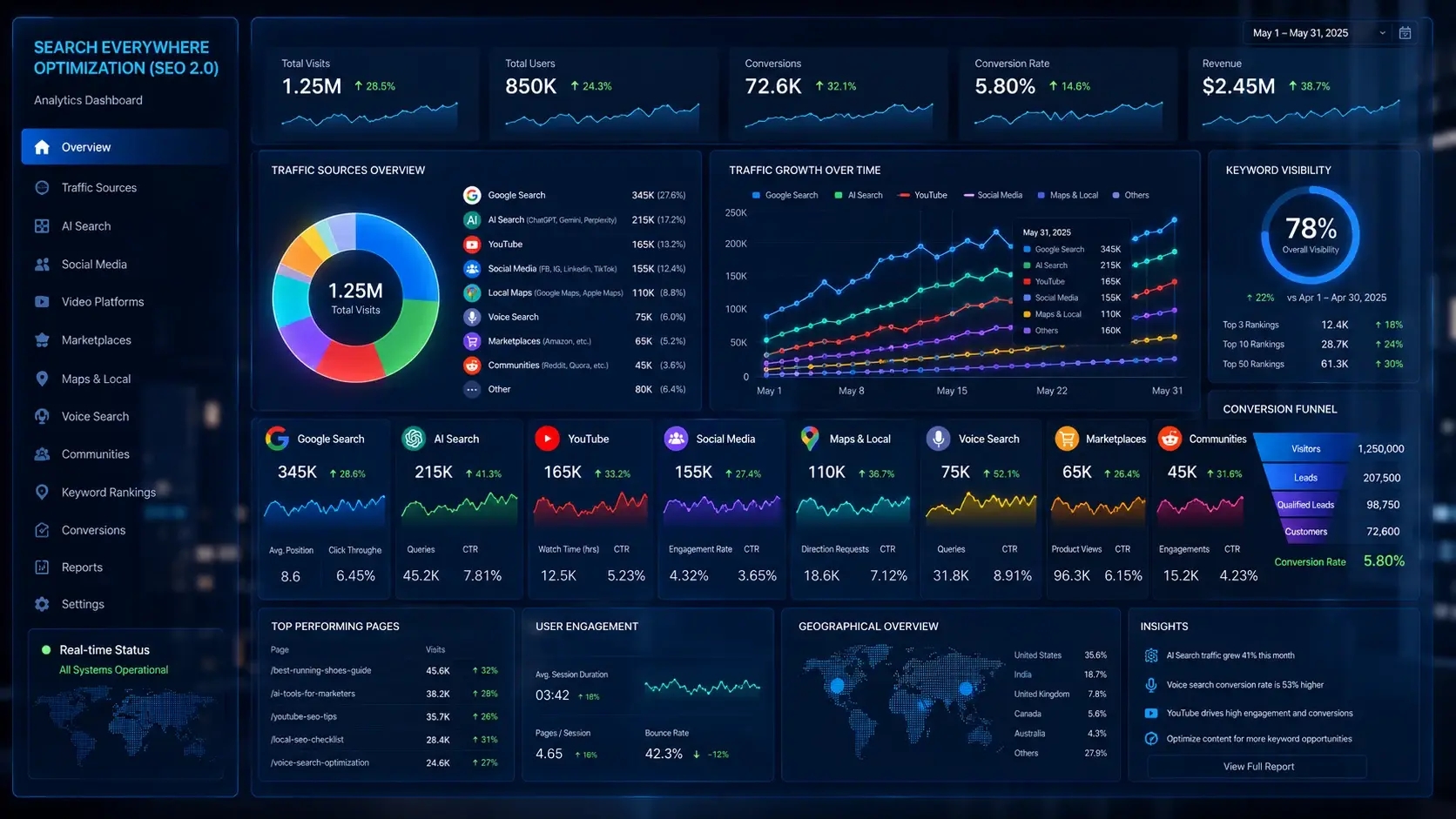
Traditional analytics focus on website traffic. SEO 2.0 requires broader measurement:
Organic search traffic (Google Analytics)
Lifetime value by discovery channel
Understanding which channels drive actual value guides investment decisions.
Companies implementing SEO 2.0 gain significant advantages:
Reduced platform dependency: Relying on one channel (Google) means algorithm changes devastate visibility. Diversified visibility means changes on one platform don't sink overall discoverability.
Higher overall visibility: More channels means more opportunities to be discovered. A customer might not find you on Google but discovers you on YouTube or TikTok.
Better customer experience: Meeting audiences where they search improves their experience and trust.
Lower acquisition costs: Diversified channels often provide better cost-per-acquisition than saturated Google competition.
Resilience: If Google visibility drops, traffic from other channels sustains business.
Brand building: Multi-channel presence builds stronger brand awareness and trust than search ranking alone.
Implementing SEO 2.0 doesn't require overhauling everything. Start with these steps:
This phased approach allows gradual implementation without overwhelming resources.
Search Everywhere Optimization isn't a trend; it's the future of how people discover information and businesses.
The businesses thriving in this environment recognize that search has fragmented. They optimize across multiple channels. They understand their specific audience's search behavior. They build authority across platforms. They measure success beyond Google ranking.
Google still matters. But Google alone is no longer enough. Success in 2026 and beyond means being visible everywhere your audience searches.
Do I really need to optimize for every platform?
No. Focus on platforms where your audience actually searches and where your business can realistically compete. Quality presence on 2-3 platforms beats poor presence everywhere.
How do I know which platforms matter for my business?
Research where your customers search: Google Analytics, customer surveys, competitor analysis, and social listening reveal actual search behavior. Start there rather than guessing.
Won't optimizing multiple platforms dilute my efforts?
Not if you're strategic. Core content adapts across platforms. Technical foundations (structured data, mobile optimization) support all channels. Focus prevents dilution.
Do I really need video if I'm not a video creator?
Not necessarily. If your audience rarely searches video, it might not be priority. But video increasingly dominates search. At minimum, test YouTube for your key topics.
How does AI search visibility differ from traditional search optimization?
Traditional SEO competes for ranking position. AI visibility means being selected as a source. It emphasizes comprehensiveness, authority, and direct answers over keyword optimization and ranking position.
What's the biggest mistake businesses make with omnichannel search?
Spreading too thin across platforms without focus. Quality presence on 3 platforms beats mediocre presence on 10. Start focused; expand as resources allow.


 Seo Admin
Jan 21, 2026
 Seo Admin
Nov 07, 2025
 Seo Admin
Apr 17, 2026
 Seo Admin
Dec 24, 2025
 Seo Admin
Jan 30, 2026