
Get a Customized Solution for Your IT Needs
+91 702-705-8777
info@pansofic.com
55-56, 1st floor, Chandigarh Complex, Prabhu Prem Puram, Ambala Cantt, Haryana 133006






Pansofic Solutions helps businesses optimize content for AI-powered search. We specialize in Google AI Overviews, content strategy, and making your brand visible in the AI era. From content audits to comprehensive digital strategy, we help you get cited by Google's AI.
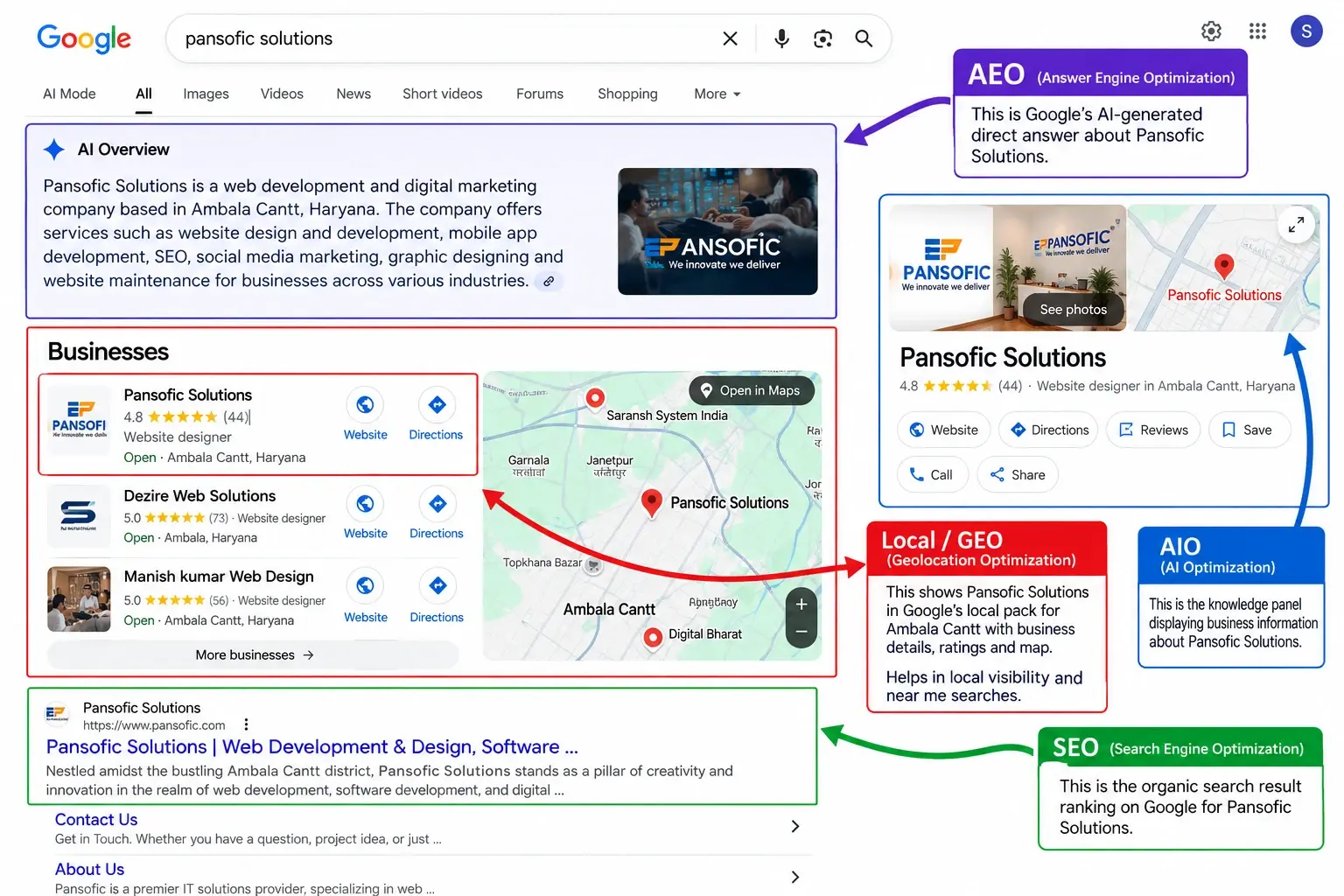
Fasten your seatbelts, because Google searching was once a 10 blue link scroll through, hoping to find your answer. These days are quickly coming to an end.
In today's context, AI-generated summaries are prominently displayed at the top of search results, providing a consolidated answer to your question from various sources.
But the rules of getting your content seen have changed drastically.
For business owners, content managers, and anyone seeking online visibility, comprehending the dynamics of AI ranking is no longer a luxury but a necessity.
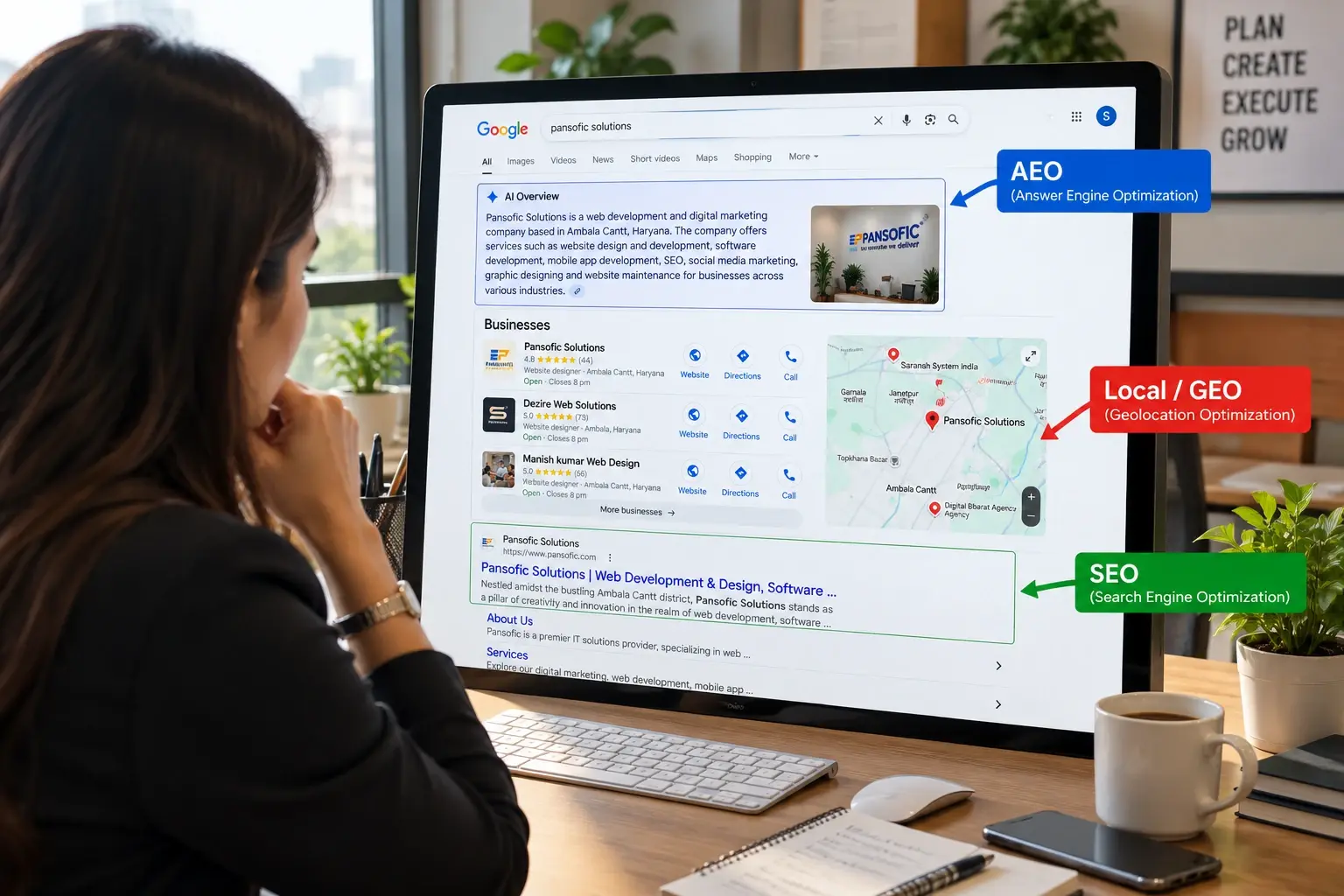
Google's AI Overviews are AI-generated summaries that pull data from various sources to provide answers directly to queries.
Google's AI now:
The result?
Nearly 60% of the U.S. search engine users are no longer clicking through to exit the search engine after their search. This is known as the "zero click" phenomenon and is changing the way digital visibility works.
The principle of AI ranking is different from traditional SEO, which is based on keyword rankings.
Stage 1: Query Understanding
AI Overviews can employ a "query fan-out" strategy, which involves sending out several similar queries to various subtopics and data sources, to build a response.
This means that Google isn't seeking the "perfect" page. It is looking for a wide range of terms to construct context.
Stage 2: Information Retrieval and Synthesis
AI engines don't just return links in order, but they look through the content they've indexed and find relevant information from various sources, then compile it into a thorough answer.
Retrieval-augmented generation allows AI to generate answers that are the average of 4 to 16 different sources.
Stage 3: The Magic of Citations
Pages cited in AI Overviews receive:
compared to non-cited pages.
The value of being included in an AI response is greater than ranking position.
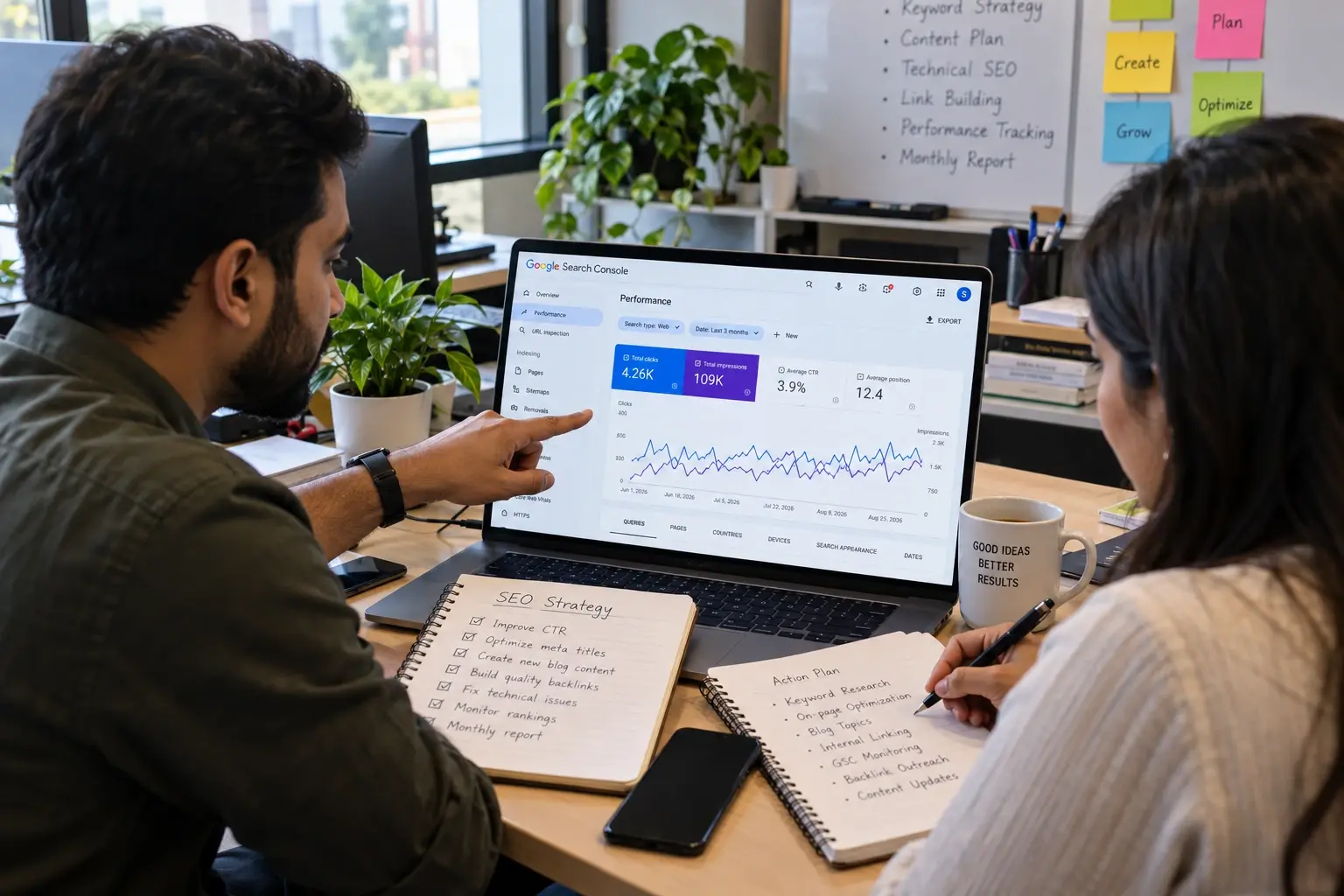
First of all, it is important to realize that Google's AI does not use all sites equally. It has a hierarchy of trust.
Based on the in-depth study of millions of AI citations from June 2025 to September 2026 by Semrush, Statista, and Ahrefs:
Reddit (40.1% of citations)
Wikipedia (26.3%)
YouTube (23.5%)
Quora (#1 specific rank in AI Overviews)
Forbes & Business Insider
Amazon & Yelp
TripAdvisor
Domain-Specific Experts:
Google My Business Or Google Scholar.
AI combines institutional power with community knowledge.
Wikipedia and YouTube are still the kings of the world, but domain-specific experts like NIH, Shopify and ScienceDirect are becoming trusted pillars in their own respective worlds.
The trend is obvious: Google prefers authoritative sources (Wikipedia, Mayo Clinic) over genuine community voices (Reddit, Quora).
That doesn't mean you have to be from a huge brand, it just means that your content must be honest, well-researched, and be based on sources that Google already trusts.
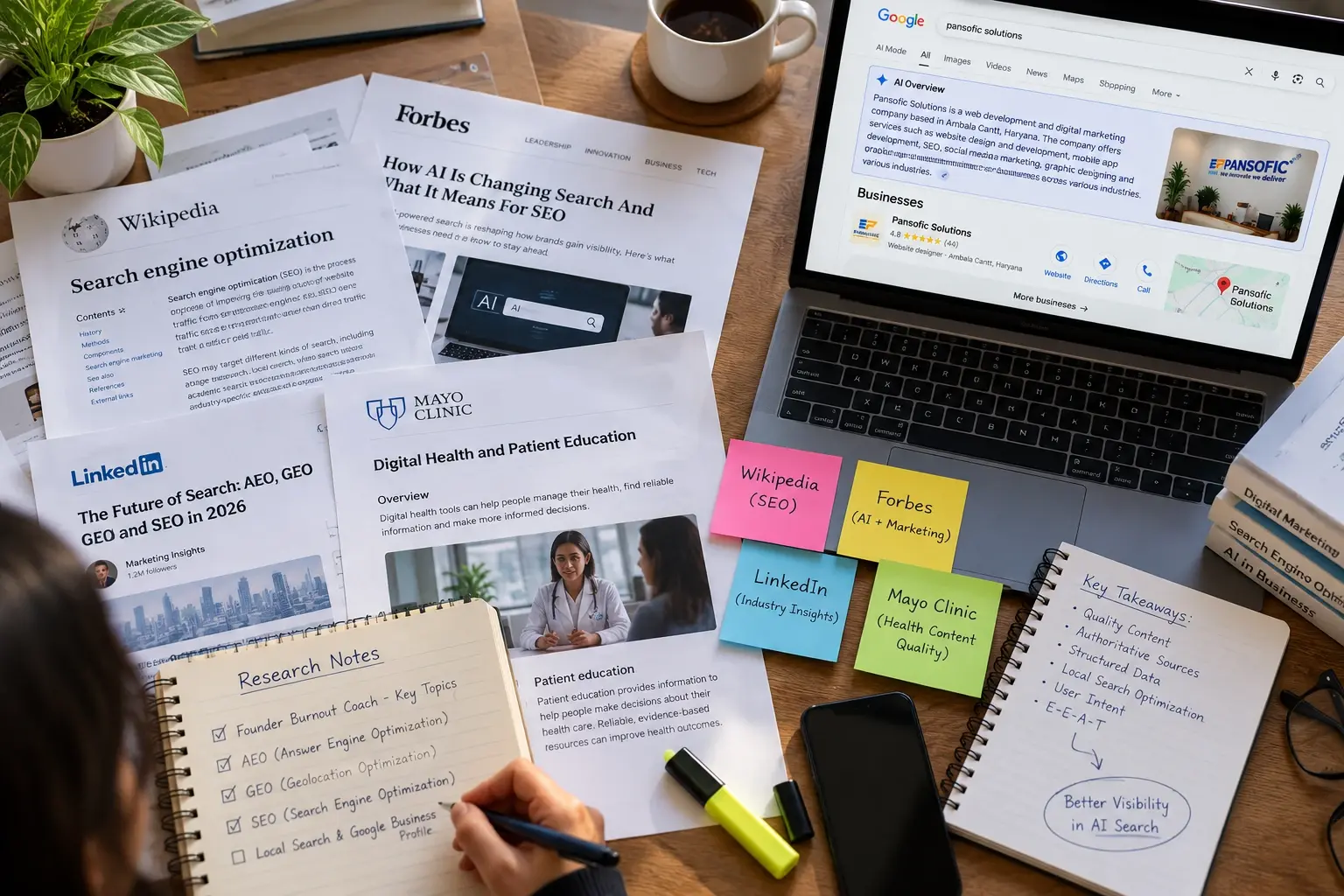
In developing your content plan, ask yourself: "Are the sources I am citing sources that Google's AI already trusts?"
Connect to:
You are providing AI systems with a strong indicator of credibility when you cite these trusted sources.
Don't use domain authority as your guiding principle. The metrics that determine AI visibility have changed dramatically.
These are the seven important key elements:
The best predictor of AI Overview selection is semantic completeness, with content rated at 8.5/10+ being 4.2× more likely to be cited.
AI focuses on passages that completely answer queries in 134–167 word self-contained units.
This means: The content must give full stand-alone answers to questions. If the reader has seen your passage in an AI summary, they shouldn't have to click through to understand it fully.
Action: Compose paragraphs that are independent. Form answers as sentences, not phrases.
The selection rate for AI-generated results is 317% higher when multi-modal content integration is used, which integrates text, images, and video.
This means: It's not just about text anymore. AI systems love rich content that includes:
Action: Add additional visuals and alternative content to each article.
Google's AI verifies facts as they are entered against authoritative databases.
Content that contains:
...has an 89% higher probability of being selected and passes verification filters.
What it means: Your content is more important than you realise. AI systems check claims before suggesting your content.
The Trusted Source Citation Strategy:
To improve your chances of being cited, use sources that Google's AI already has trust in:
If this trusted hierarchy is cited as a source, AI systems identify: "This person did real research and consulted recognized authorities."
Action: Reference authoritative sources from trusted domains listed above. Use recent statistics. Verify facts with multiple sources. Cite peer-reviewed research where applicable.
Google prefers pages that are written by people who know the subject.
Content needs to demonstrate authority and first-hand experience to rank in AI overviews.
E-E-A-T Enhancement includes:
The message: It's important to be who you are. AI systems want to know that your content is written by real experts.
Action: Feature author bios, include expert interviews, showcase credentials, and share case studies.
The structure and format of the content also play a crucial role in its visibility to AI, as listicles, how-to guides, and Q&A articles are cited 35% more often than unstructured content.
What this means: How you organize information is as important as what you say.
Action: Use the following formats:
Content quality is more important than domain authority – if the content on a smaller site is well structured, it can outrank established brands if it answers the user's questions better.
Semantic relevance is more important than keyword density – AI can comprehend context and related ideas, not just exact keywords.
This is actually a positive development for those who are not mega brands. Content is more important than ever.
Knowing the true intent of a searcher. Answer their question in full.
Compose paragraphs that are self-sustaining. When quoted, they should have meaning without context.
Don't just write. Make rich, multimedia content that demonstrates rather than explains.
Include subject matter experts. Provide credentials, experience, and unique perspectives.
Connect to peer-reviewed research, official information, and trusted experts. This helps establish trust in your content.
Make sure to cite sources from the trusted hierarchy:
If AI systems recognize your content as a trusted source, they are more inclined to link to it as well.
Structured data, such as schema markup, is crucial for search engines to comprehend the content on a page. To achieve AI visibility, use structured data markup.
AI-powered results prioritize mobile-friendly pages and faster sites rank higher in AI-powered search.
Use these tools to monitor your AI Overview appearances:
The shift from traditional ranking to AI citation is profound:
Traditional SEO | AI Ranking |
Focus on keyword density | Focus on semantic relevance |
Rank the entire page | Cite individual passages |
Drive traffic to your site | Get mentioned in summaries |
Domain authority is key | Content quality is key |
Backlinks are crucial | First-hand expertise matters |
The AI ranking environment is not a danger; it's a chance for companies that produce truly great content.
Here are some steps you should take:
At Pansofic Solutions, we can assist businesses in navigating this new AI-powered search landscape.
From optimizing for AI Overviews to developing a comprehensive digital strategy, our team is well-versed in making your content truly discoverable.
It's not if AI ranking will be important; it's whether you'll make sure it's optimized.
Looking to optimize your content for AI ranking? Get a free content audit from Pansofic Solutions today.
Answers to some typical questions.
The short answer is: No, if it's you that Google references.
The truth is: 60% of people do not go past the AI summary. When your content is cited, however, you're rewarded with credit and click-through. Plus, the other 40% still click through – and they do so because Google's AI recommended it.
Imagine that Google has personally recommended you to be in a Google AI Overview. That's powerful.
Absolutely. In fact, the new system is fairer to smaller companies.
The importance of domain authority is much less today. A 5-person start-up can beat a Fortune 500 company with better, more in-depth content. The AI system is concerned with:
It doesn't matter the size. Quality does.
Use these tools:
First, use Google Search Console. It's free, and it will let you know which pages are showing up in AI Overviews.
No. Begin with the top 5 pages.
Focus on:
It's not necessary to start from scratch. The little changes you make to your most visited pages will make the most difference.
The same principle holds true. Find the best sources in your subject:
If you're in a niche industry, reference niche experts, not generic sources. AI systems have domain-specific authority.
Don't get too carried away, but stay fresh.
AI systems tend to favor fresh data, but it is not necessary to rewrite everything every month. Do not constantly update, but focus on accuracy and completeness.
No, but it's changed. The basics of SEO, such as mobile-friendliness, page speed and clean URL structures are still relevant. It's what Google values the most has changed.
It's not:
It is:
It's like SEO grown up.
The fundamental principle is that the core principle won't. Google always prioritizes high-quality, well-sourced, expertly written content.
The principles will not change, although tactics may change (new tools, new features, new citation formats). Build authority and make truly great content, and you'll be ready for whatever is next.
We support businesses in this new AI-powered search world.
From identifying the pages that need to be focused on to restructuring content for AI citations, or creating a robust content strategy, we're here to assist.
Let's begin with a discussion. Submit your best 3 pages, and we'll provide you with honest feedback on how they compare in terms of AI citations.
No pitch. No sales call. Just strategy.

 Seo Admin
Jan 21, 2026
 Seo Admin
Nov 07, 2025
 Seo Admin
Apr 17, 2026
 Seo Admin
Dec 24, 2025
 Seo Admin
Jan 30, 2026